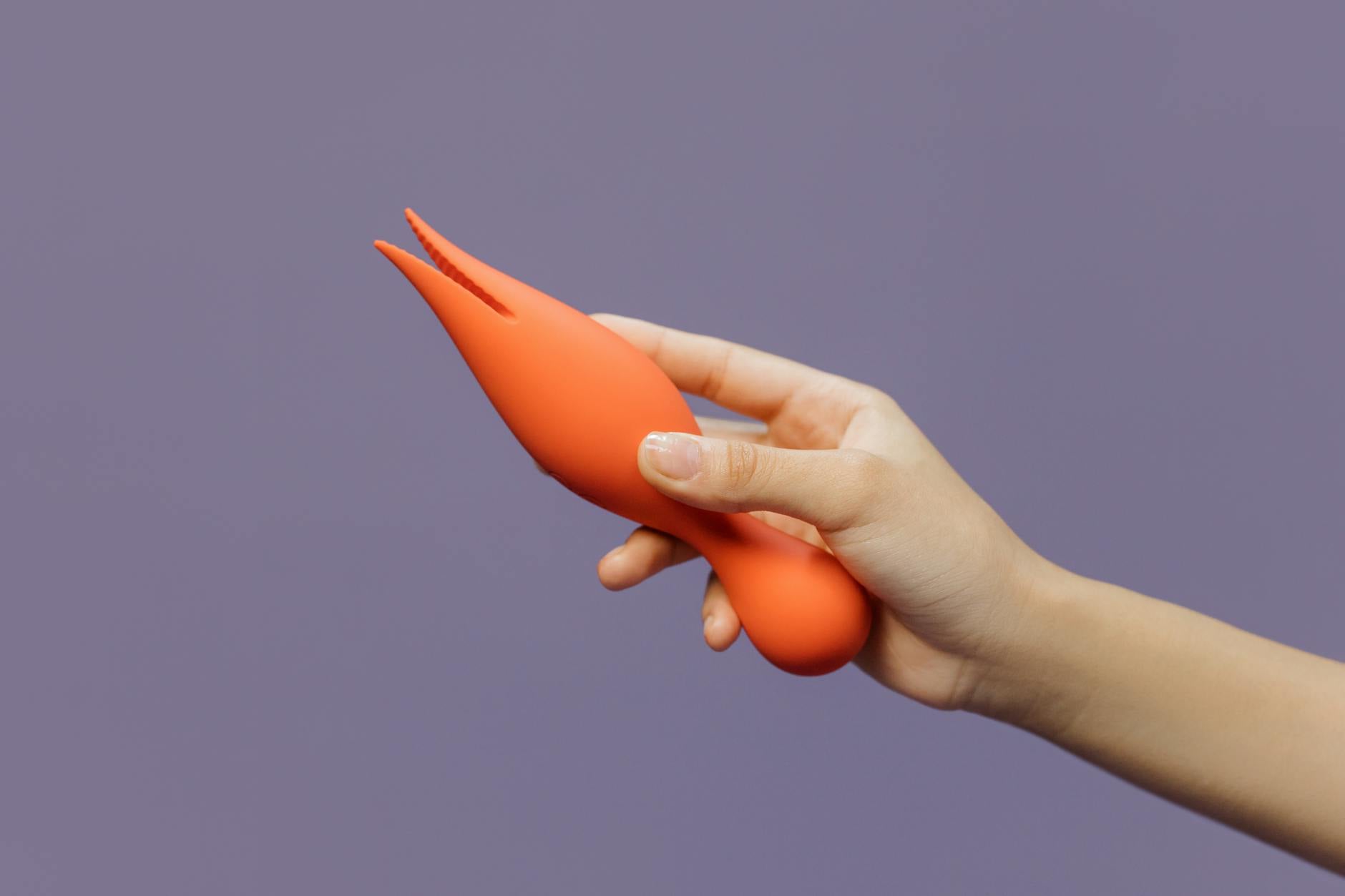
How to Use Lemon Vibrators During Sex With a Partner If You're Nervous
Let's be real. You want to bring a lemon vibrator into your sex life with your partner, but you're stuck in that loop where you think: "If I introduce this, am I saying they're not enough? Will they feel offended? Will it kill the mood?"
I hear this all the time. And here's the truth that might surprise you. Most partners aren't thinking "she wants a vibrator because I'm bad at this." They're thinking "she knows what gets her there, and she's inviting me to help."
The nervousness is real, though. And it deserves a real answer.
The actual reason you're nervous (and why it matters)
You're not nervous about the vibrator. You're nervous about vulnerability. Using lemon clitoral vibrators during partnered sex means you're saying out loud: "This is what feels good to me." That's exposure. That's asking for something specific instead of hoping your partner figures it out.
Most of us were raised with exactly zero permission to do that. So when you're considering bringing a vibrator into the bedroom, what you're actually wrestling with is whether it's okay to prioritize your pleasure in front of someone else.
It is. Full stop.
The secondary nervousness, the one about your partner feeling inadequate? That's projection most of the time. You're imagining a reaction that hasn't happened yet.
How to start the conversation (without making it weird)
Don't schedule it. Don't turn it into a serious talk. These conversations go better when they're casual and happen outside the bedroom.
Try: "I've been thinking about trying a vibrator during sex. I read that people use them and it can feel really good. Would you be okay with that?"
That's it. You're not apologizing. You're not over-explaining. You're not saying "If you don't mind..." or "Would you maybe think about..." You're stating a preference and asking if they're in.
Their answer will tell you everything.
If they say yes immediately, great. If they ask questions, answer them straightforwardly. "Will you still want me?" gets "Yes, this is about adding something, not replacing anything." "Does this mean the sex we have now isn't good?" gets "No, this is about exploring what else feels good."
If they say no, that's a different conversation. Not one about the vibrator. One about why pleasure feels threatening.
The practical setup (and why it matters more than you think)
First time nerves are about logistics as much as psychology. Here's what actually helps.
Start clothed. Not all the way clothed, but like, underwear on. Talk about the vibrator sitting there. Let them hold it, turn it on, feel the patterns. Touching the device while you're still partly clothed removes the sudden-nakedness problem and lets the vibrator become a normal object instead of a loaded symbol.
When you do move to skin, use it on yourself first while they watch. Not as a performance. Just as a matter-of-fact thing. "This pattern feels good" said while using a lemon vibrator on your own clitoris does two things. It shows them where you actually want stimulation, and it removes the mystery.
Then they can try. Or you can guide them. "Lighter pressure, more side to side" takes out the guessing game.
Why lemon clitoral vibrators specifically change this dynamic
Most couples toys feel clinical or look expensive and serious. A lemon vibrator feels playful. That matters because playfulness disarms the pressure.
The suction pattern (if you're using The Lemon) also means your partner isn't trying to replicate something with their fingers. They're assisting with a device that does something different. That's not competition. That's collaboration.
If you're using a different style of vibrator, the same logic applies. The device does what fingers can't do, which means your partner's role becomes "I'm here with you while this device does its thing," not "I'm being replaced."
What to actually do once the vibrator is in play
There's no one way. But here's the shape that usually works.
Start with whatever foreplay you normally do. Then introduce the vibrator while they're still involved. They might be inside you, or touching you, or just close. The vibrator isn't inserted (unless you're using a specific kind). It's on your clitoris, and they're part of the moment.
This is where communication actually matters. Tell them what you're feeling. Not as narration. Just normal feedback. "That feels good." "Harder." "Different pattern." It reminds them they're not sidelined. They're getting real-time info about what's working.
Orgasm might be quicker. That's okay. Orgasm might take longer. That's also okay. The goal is that you finish together, which for most people means you get to come, then you help them finish, or vice versa. The vibrator doesn't change that structure.
The emotional part after (the thing everyone skips)
Right after, when the nervous energy is gone, tell them something true. "That was good." "I liked having you here while I was using it." "I felt connected." Something that's honest and ties pleasure back to partnership.
This isn't about reassuring them. It's about acknowledging what just happened. You tried something. It worked. That's intimate.
The next time gets easier
Second time, you both know the shape of it. No more mystery. Third time, you might not even talk about it. It just becomes a normal part of what you do.
Some couples use lemon vibrators occasionally. Some use them every time. Some bring them in for specific kinds of sessions. The point is the anxiety drops dramatically once you realize it's just a toy, and your partner is still fully present.
What happens if it doesn't work the first time
Sometimes the mood gets weird. Sometimes someone gets in their head about it. That happens. It doesn't mean you can't try again.
Wait a few days. Then: "I want to try that again. I think I was nervous last time and it made everything stiff." Most partners appreciate the honesty and a second shot.
If nervousness persists on their end, the issue isn't the vibrator. It's something deeper about what pleasure means to them. That's worth exploring together, maybe with a couples therapist who isn't going to blush about talking about sex.
The actual outcome (what usually happens)
What I see clinically is this: couples who introduce vibrators tend to feel closer after, not farther apart. Why? Because they've had a vulnerable conversation and done something slightly risky together. That's intimate. The vibrator is just the vehicle.
Your partner gets to see you experience real pleasure. You get to feel pleasure without explaining or performing. You both get to be present in something that's actually about both of you.
Nervousness is protective. It's your system saying "this matters, be careful." Listen to that. But don't let it convince you that your pleasure and your partnership are opposites. They're not.
FAQ: The questions people actually ask
What if my partner says the vibrator bothers them?
Ask specifically what bothers them. Is it the noise? The appearance? The idea that you came from something other than them? Different things get solved different ways. The vibrator being silent or waterproof doesn't fix a deeper belief issue. That needs conversation, not a different product.
Should I use the vibrator during penetration?
Yes, if that feels good. Most people use it on the clitoris while their partner is inside them or outside them. Some people use external vibrators on their own body while a partner is inside. There's no rule. Experiment and see what creates the sensation you want.
Will using a vibrator change what I want from my partner?
Not your partner. It might change what you want from sex. You might discover you enjoy longer sessions, or that you like a specific kind of stimulation you didn't have a name for before. That's useful information for both of you, not a threat.
Is it normal to feel self-conscious using a vibrator in front of your partner?
Completely normal. That feeling usually passes after the first or second time. It's the same discomfort as being naked in bright light. Your brain adjusts when nothing bad happens.
Can I surprise my partner with the vibrator, or do I need to ask first?
Ask first. Surprise toys create surprise anxiety. A heads-up conversation eliminates that and usually makes the actual experience better because nobody's caught off guard.
What if we don't have much time? Can we still use the vibrator?
Yes. Vibrators actually make faster sessions easier for most people because they cut through the time it takes for arousal and orgasm. A 10-minute quickie with a vibrator can be more satisfying than a 20-minute session without one.
The bottom line
Using lemon clitoral vibrators with a partner isn't about fixing anything. It's about knowing what feels good and being brave enough to share that. The nervousness you're feeling right now is usually worse than the actual conversation and the actual experience.
Your pleasure is not a threat to your relationship. It's part of it. And most partners are more relieved than offended to finally understand what actually gets their partner there.
If you're ready to explore this with your partner and want to know more about which tools might work for you both, reach out at /contact. We're here to help.