
Here's the thing about long-term partnership and orgasms
After five, ten, or twenty years with the same partner, your orgasms can start to feel like a familiar route you've driven so many times you don't really see the landscape anymore. Not bad. Not painful. Just. There. Like breathing. And honestly, that flatness can feel like a personal failure when actually it's just what happens to pleasure when it becomes routine.
The real issue isn't your capacity for intensity. It's that your partner, no matter how much they love you, can't access the exact angle, rhythm, and pressure your body has learned to crave in isolation. They're working from memory and feedback. You're working from decades of learned response.
This is where lemon clitoral vibrators change the game. Not because they replace your partner. But because they give you permission to find something your partner cannot give you: total control over your own orgasm.
Why orgasms feel flatter after years of partnered sex
There are three things happening in your nervous system simultaneously.
First, repetition actually softens novelty signals in the brain. The same rhythm from the same person in the same position teaches your nervous system to produce a baseline response. It's not passion fading. It's biology. After years of the same stimulation pattern, your clitoris needs either more variation or more intensity to reach the same peak.
Second, you've probably learned to orgasm in service of your partner's timeline. A woman I worked with described it perfectly: "I'm always listening for when he's close instead of listening to my own body." That split attention is the enemy of depth. You're not fully present. Your nervous system is doing two jobs at once.
Third, the pressure to perform or reciprocate creates a cognitive load that hijacks the parts of your brain responsible for sustained arousal. You're managing the emotional tone, his satisfaction, the pace, the position. That's a lot of executive function happening while your clitoris is trying to do something that needs your full attention.

Photo by cottonbro studio on Pexels
How lemon vibrators rebuild intensity
Lemon sexual toys work differently than your partner's hands or penis because they offer something radically simple: unvarying stimulation calibrated to your exact sensitivity.
A lemon clitoral vibrator applies consistent pressure at a frequency your partner literally cannot maintain. It doesn't get tired. It doesn't change rhythm based on their arousal. It doesn't require your reassurance or feedback. And it works at patterns and intensities that most human bodies can't replicate for more than a few seconds.
But here's the part that actually matters for deeper orgasms. When you're using a lemon vibrator alone, your brain gets to drop all the background noise. No one's satisfaction to monitor. No performance pressure. No splitting your attention. Just your body and a single, focused stimulus.
Many people report that their first strong orgasm with a lemon vibrator feels almost shocking because they've forgotten what full-body focus feels like. That's not the toy working miracles. That's your nervous system finally getting permission to do its job.
The practical starting point
If you've been in partnered sex for years, your clitoris might actually be expecting certain kinds of stimulation. You might reach automatically for the same pressure or rhythm your partner uses. That's learned muscle memory in your nervous system.
Start by exploring three different patterns on a lemon vibrator at low intensity. Don't go straight to the setting you assume will work. Let your body surprise you. Many long-term partnered people find that the sensations they thought they wanted feel boring or too direct once they're alone.
Budget time differently too. Alone pleasure doesn't need to hit a climax. Sometimes the point is just to feel sensation without urgency. Fifteen minutes exploring pressure variations teaches your body what it actually wants, not what it's learned to settle for.
The second layer is positioning. Most partnered sex happens in a handful of poses. Solo play lets you angle a lemon vibrator at forty-five degrees or directly sideways or in patterns that would be awkward with a partner. Your clitoris has a lot of nerve endings in lots of directions. Your partner was only ever accessing a few of them.
Rebuilding pleasure after years of routine
Long-term couples often report that solo pleasure with a tool like a lemon vibrator actually improves partnered sex afterward. Not because the partner is suddenly better. But because you've reminded your nervous system what intensity feels like. You've relearned what your body actually wants when no one else's expectations are in the room.
This matters especially if you've spent years faking satisfaction or coaching your partner toward a certain rhythm they still never quite hit. You've essentially trained your clitoris to accept "good enough." A lemon vibrator breaks that pattern in two or three sessions.
There's also permission at play here. Using a clitoral vibrator solo says to yourself, "My pleasure is worth pursuing for its own sake." Not as a precursor to penetration. Not as a way to relax. As its own complete experience.
When to bring it into partnered time
Once you've spent a few weeks using a lemon vibrator alone and remembering what deeper orgasms feel like, the invitation to bring it into partnered sex becomes easier to make. Some couples find that a partner using the vibrator on them while they're together creates a totally new dynamic. Others prefer to use it solo while their partner is present but not directly involved.
Honestly though, the most profound shift usually comes from what solo play teaches your nervous system about your own capacity. You can't unknow that. Once you've felt what your clitoris can do when you're fully present and there's zero performance pressure, that knowledge changes how you show up in partnered sex.
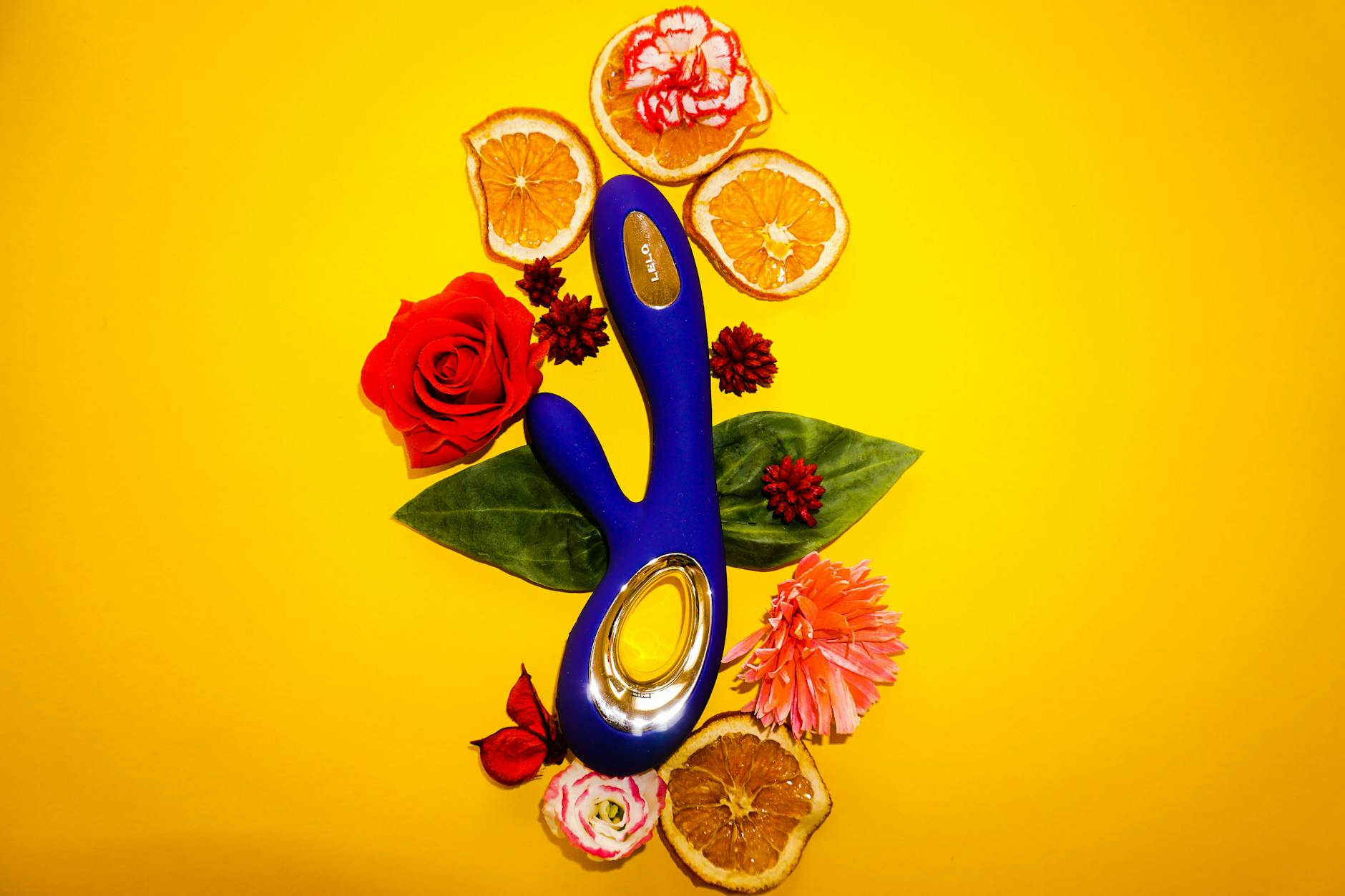
Photo by DRT.fm on Pexels
You also get to make requests from a place of knowledge, not guessing. Instead of "I wish you'd...," it becomes "I know I can reach really intense orgasms when..." That shifts the entire conversation from complaint to information.
The timeline for noticing a difference
If you're used to routine orgasms with a partner, expect the first few solo sessions with a lemon vibrator to feel strange or even disappointing. Your nervous system is trained for a certain pattern. It takes three to five sessions for your body to start sending different signals.
By week two, most people notice they're reaching deeper or faster than they did with partnered sex alone. By week four, they're often reporting orgasms that feel qualitatively different. More intense. More full-body. More surprising.
That's not because the vibrator is magic. It's because you've finally asked your nervous system to focus entirely on sensation without distraction. And your nervous system is very good at that job when you give it the space.
What changes in your partnership after this
Here's what I see clinically. Couples where one partner rediscovers solo pleasure often report feeling closer, not more distant. That sounds counterintuitive until you realize what's actually happening. You're no longer asking your partner to be responsible for your orgasms. You're owning your own capacity.
That removes resentment. It removes the unspoken pressure. It removes the "you're not doing it right" dynamic that corrodes long-term relationships. Instead, your partner gets to be part of pleasure that already exists, not the sole generator of it.
You might also find that deeper orgasms alone make you want partnered sex more often, not less. Pleasure begets desire. After years of flat orgasms, remembering what intensity feels like can relight a whole part of yourself you'd assumed was dimmed by age or familiarity.
Getting started with intention
If you're in a long-term partnership and your orgasms have become routine, a lemon clitoral vibrator is one of the most direct ways to rebuild that capacity. Set aside twenty minutes when you have privacy. Try one pattern at a time. Notice what your body actually wants instead of what you think should work.
Then watch what shifts. Not just in solo pleasure, but in how you feel in your own body and what that permission opens up in your partnership.
People also ask
Will using a lemon vibrator make my partner feel threatened or inadequate?
Not if you frame it as solo exploration, not as criticism. Your partner doesn't need to feel replaced. The real conversation is, "I want to remember what my body is capable of." Couples where both partners support solo pleasure actually report feeling closer, not more distant. If your partner struggles with this, that's worth a separate conversation about insecurity or how you talk about pleasure together.
How often should I use a lemon vibrator to rebuild orgasm intensity?
Start with two to three times per week for the first month. That's enough frequency for your nervous system to learn new patterns without turning pleasure into a performance metric. After a month, use it as often as feels good. There's no "too much" with solo exploration.
Can I use a lemon clitoral vibrator if I have sensitive tissue after years of the same stimulation?
Absolutely. Lemon vibrators offer different intensity levels. If your tissue feels sensitive, start at the lowest setting and go slowly. The suction style of certain lemon toys is actually gentler on sensitive tissue than direct vibration because it distributes pressure over a wider area.
What if I still can't reach as deep an orgasm as I want, even with a lemon vibrator?
That's worth checking in with what else is happening. Stress, hormones, medications, and underlying health issues can all flatten orgasm capacity. A lemon vibrator can't fix a medication side effect or burnout. But combined with stress reduction, sleep, or checking in with a healthcare provider, it becomes part of a bigger toolkit.
Should I tell my partner I'm using a lemon vibrator for solo play?
That depends on your relationship. If you usually have open conversations about sex and pleasure, transparency builds trust. If secrecy is typical in your relationship, that's a different conversation entirely. Ideally, solo pleasure isn't a secret from your partner. It's just your own private exploration that enriches what you bring to partnered time.
Do I need to use lube with a lemon vibrator?
Many people find water-based lube makes solo play more comfortable, especially if tissue feels dry or after years of routine partnered sex. It's not required, but it often makes the experience more pleasurable. A little goes a long way.
What you actually need to know
After years of partnered sex, your orgasms don't get weaker. They get narrower. Your nervous system learns a single pattern and settles into it. A lemon vibrator isn't a replacement for your partner. It's permission to remember what your body can feel when you're fully present and there's zero performance pressure.
That knowledge, once you have it, changes everything about how you show up in partnered sex. You stop accepting routine. You start asking for what your body actually knows it wants. And that matters for your pleasure, your confidence, and your relationship.
If you're feeling disconnected from your own capacity for intensity after years with the same partner, start with solo exploration. Give your nervous system space to remember. Then watch what becomes possible.
Ready to explore? Contact us if you want personalized guidance on finding the right tool for your body.