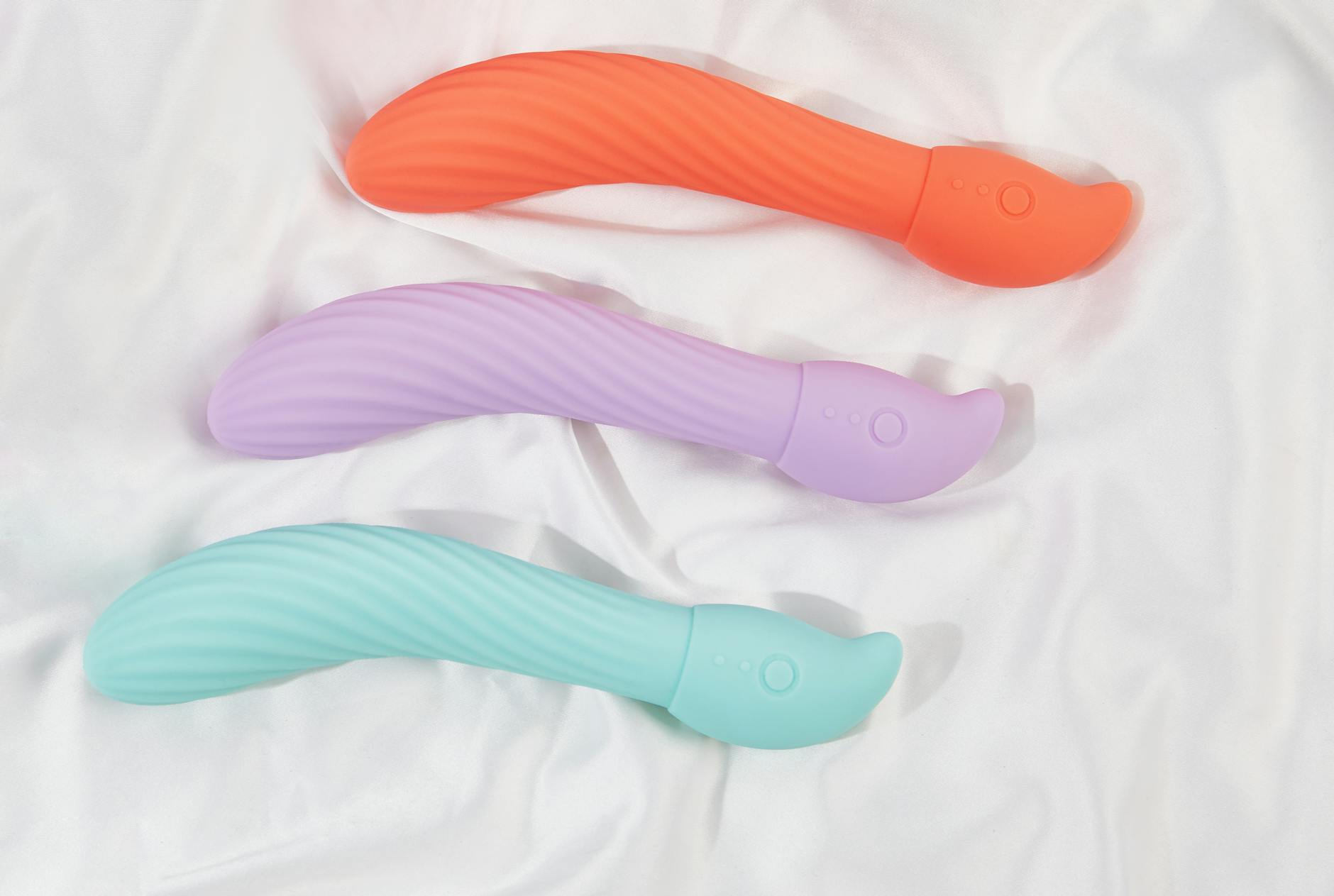
Your pleasure isn't static. Your cycle is the proof.
Let's be real: if your desire, sensitivity, and orgasm strength stayed exactly the same all month, pleasure would be pretty boring. But they don't. Your cycle creates a predictable rhythm of physical and neurological changes, and knowing how to work with them using lemon vibrators means you'll actually get what you want instead of forcing the same approach every single day.
This isn't mystical. It's hormonal architecture. And once you map it, you can make smarter choices about intensity, duration, and timing that actually match your body.
The follicular phase: when sensitivity peaks
Days 1 through around day 13 (the stretch from your period through ovulation), estrogen is climbing. Your blood flow to the clitoris increases. Your nerve endings become more responsive. This is when many people report orgasms feeling easier to reach and more intense.
If you're using a lemon vibrator during this phase, you can often start on a higher intensity setting than you might use later in your cycle. The tissue is more engorged, more responsive. A pattern 4 or 5 on the Lem might feel perfect when a 2 or 3 would be the sweet spot in your luteal phase.
Warm-up time also tends to be shorter. Where you might spend 15 minutes building arousal in the luteal phase, follicular-phase arousal often peaks in 8 to 10 minutes. That's not you being "faster" or "easier." That's biology working in your favor.
Ovulation: the intensity window
Around day 14 (give or take a few days, depending on your cycle length), your estrogen peaks and then dips slightly as testosterone surges. For maybe 48 hours around ovulation, many people report their strongest sexual interest of the month and their most intense orgasms.
This is not the time to be cautious. If you've been curious about a higher pattern on your lemon clitoral vibrator or wanted to try a different technique, ovulation is often when your body can handle (and wants) more stimulation. Some people notice they can have multiple orgasms more easily during this window. Others report that their orgasms feel deeper or more full-body.
The catch: ovulation is also often the shortest window. It lasts maybe 12 to 48 hours. If you want to lean into what your body is offering, pay attention to when it happens and plan accordingly.
The luteal phase: when you need a different approach
After ovulation, everything changes. Progesterone rises. Estrogen stays high but then drops. Your metabolic rate increases. Your clitoris becomes less engorged, less immediately responsive. This is the two-week stretch before your period, and it's when most people need to adjust their lemon vibrator strategy.
Here's what I hear from clients: "It feels harder to come. I need more time. Even my favorite toy doesn't feel as good." That's not failure. That's your physiology shifting.
During the luteal phase, start lower. Pattern 2 or 3 on a lemon vibrator often feels better than jumping to 4. Take longer warm-up time. Twenty to thirty minutes is normal. You might also notice that direct clitoral stimulation feels less pleasant and that you prefer stimulation around the clitoris, or indirect pressure through the fabric of underwear.
Communicate this to partners if you have them. "I need gentler touch this week" is not a rejection. It's data.
Three practical tweaks based on where you are
During the follicular phase: Use faster patterns on your lemon sucker, keep sessions shorter, and prioritize direct clitoral stimulation. Your clitoris wants input.
During ovulation: This is when you can experiment. Try patterns you normally skip. Try longer sessions. Try combining your lemon vibrator with something else. Your body is primed for sensation.
During the luteal phase: Slow down, warm up longer, and shift to gentler patterns. If you notice that direct stimulation starts to feel numb or desensitized, that's a sign to back off intensity, not a sign to push harder. Use the Lem on a lower setting and let arousal build naturally.
Why this matters for partnerships
If you're with a partner, your cycle creates a rhythm in shared pleasure too. Here's the thing: if your body is less responsive in the luteal phase, and your partner doesn't know that's temporary and predictable, they might interpret it as "they're not interested in me right now." Suddenly there's hurt. Misunderstanding. Distance.
Mapping your cycle and naming it transforms that dynamic. You can say, "This week, I'm in my luteal phase. I'm still very interested in us, and I also need more warm-up time and gentler pressure. Can we try that?" That's partnership. That's actually helping each other understand what works.
If you're rebuilding intimacy with a partner, understanding cycle-based pleasure shifts can be the missing piece. A lemon clitoral vibrator becomes not just a personal tool but a way to communicate what your body needs week to week.
The app trap (and why you don't need one)
There are apps designed to track your cycle and "predict" your arousal. Honestly? You don't need the app. You just need to pay attention. Track your period for two or three months. Note when you feel most interested in pleasure, when orgasms feel easiest, when you prefer gentler touch. You'll see the pattern without an algorithm.
Your body is already sending signals. The app just translates them. But you can do that yourself.
When your cycle is irregular (or doesn't exist)
If you have an IUD, take hormonal birth control, or don't menstruate for other reasons, you might not have the same monthly peaks and valleys. That's fine. Instead of following a 28-day map, tune into your actual arousal. Maybe you cycle faster. Maybe you don't cycle at all. The principle stays the same: notice what works, adjust your lemon vibrator intensity accordingly, and build pleasure around what you're actually experiencing, not what a template says you should experience.
If you're on hormonal birth control, you might notice that you have less variation across the month. Some people find that their pleasure is more consistent. Others miss the peak sensations. If you're curious about what shifts, try tracking pleasure intensity for two months and see what emerges.
The luteal phase reset (your secret weapon)
One last thing: if you've been pushing hard during the luteal phase and it's not working, try the opposite. Spend a week using your lemon sexual toy only during your follicular phase or ovulation. Don't use it during the luteal phase at all. Let that window be about slower, partnered touch, or nothing at all.
Weirdly, this often resets your sensitivity. When you come back to the lemon vibrator during your next follicular phase, it can feel like rediscovering it. Your nervous system has time to recalibrate.
You're not broken. You're rhythmic. Your lemon clitoral vibrator is flexible enough to dance with your body's actual needs. That's the whole point.
People also ask
Does my period actually affect how vibrators feel?
Completely. Menstrual hormones change blood flow, nerve sensitivity, and tissue firmness. During your period, some people report orgasms feeling more intense (because of increased pelvic pressure and vascularity). Others report feeling less interested in stimulation. Both are normal. Your clitoris is more engorged and sensitive right before and during your period, and less so in the days after ovulation. A lemon vibrator that felt perfect last week might feel off this week.
Is it normal that my arousal is way faster during ovulation?
Yes. Your testosterone surges around ovulation, and you're neurologically more responsive to touch. Warm-up time genuinely gets shorter. It's not that you're "usually" slow or "usually" fast. You're both, depending on where you are in your cycle. That's not a flaw. That's a feature.
What if I use hormonal birth control? Do I still have a cycle?
You still have some hormonal variation, though it's usually much smaller than an unmedicated cycle. If you're on a standard birth control pill, you might notice slightly more interest during your "hormone-free" week. But you won't have the same ovulation peak. If you don't notice cycle-based changes on hormonal birth control, that's also completely normal. Pay attention to what you actually experience, not what the template says you should experience.
Can I use a lemon vibrator during my period?
Absolutely. During menstruation, the clitoris is often more engorged and sensitive, so many people find orgasms easier to reach. Some prefer gentler patterns during their period. Others go harder. There's no rule. The only consideration is comfort. If you find that vibration during your period gives you cramping, ease off. If it feels great, keep going.
Does tracking my cycle mean I have to plan sex in advance?
No. But knowing your cycle helps you understand yourself. If you want spontaneous pleasure, great. Knowing that you're in your luteal phase and might need more warm-up time just means you give yourself that. It's not scheduling. It's self-awareness. When you know your rhythm, spontaneity becomes easier, not harder.
What if my cycle is irregular or I have PCOS?
If your cycle is longer, shorter, or unpredictable, the monthly template won't work for you. Instead, notice your own patterns. You might cycle faster. You might have a longer follicular phase. You might not have a clear ovulation window. Track your pleasure and sensitivity for three months and build your own map. Hello Nancy's lemon vibrators are flexible enough to work with whatever rhythm you have.
The real insight
Your body isn't broken when it feels different week to week. It's communicating. A lemon clitoral vibrator becomes more useful when you listen to what your body is actually asking for, rather than forcing the same approach every day. That's when pleasure stops feeling like something you're chasing and starts feeling like something you're partnering with.
If you're curious about how your own cycle shapes your pleasure, start tracking. Not with an app. Just with attention. Note the week when orgasms feel effortless. Note when you prefer gentler touch. Note when direct stimulation feels too much. Within three months, your cycle will reveal itself. Then you'll know exactly how to use your tools—including a lemon vibrator—to work with your body instead of against it.
Your pleasure isn't one thing. It's a rhythm. And once you know the rhythm, you can dance with it.