
Let's start with the complicated truth
Recovery isn't linear, and it's almost never synchronized. One partner heals from surgery, illness, medication changes, or emotional trauma faster than the other. The slower one needs gentleness. The faster one starts feeling lonely, resentful, or disconnected from their own body. The gap between you grows wider the longer you pretend it doesn't exist.
This is one of the hardest conversations couples avoid having. You don't want to pressure your partner. You also don't want to pause your own pleasure indefinitely. Neither of you knows how to talk about it without someone ending up feeling guilty or unseen.
Here's what I've learned from working with couples navigating this exact tension. Different recovery timelines aren't a relationship problem. They're a logistics problem. And logistics have solutions.
Why timing mismatches create such specific pain
When partners heal at different speeds, pleasure becomes a minefield. The person who's ready sooner often carries shame about their desire. They feel like they're pressuring their partner, even when they're not. The slower-to-heal partner feels rushed, guilty for holding back, and worried their partner will lose interest entirely.
Both of these emotions are rooted in the same place. You've both been taught that coupled sexuality has to happen in sync or not at all. One person initiates, the other receives, everyone climaxes in the same window, and everyone goes to sleep happy. When that fails, you think the relationship is broken instead of realizing the model never fit most couples in the first place.
Add in recovery from illness, medication side effects, or surgery, and the pressure intensifies. Time becomes loaded. You're thinking about how long you've been waiting, how much longer you have to wait, whether this is permanent.
What lemon vibrators actually solve here
A lemon clitoral vibrator like the Lem doesn't make your partner heal faster. Nothing does. What it does is decouple your pleasure from theirs. You can have an orgasm without needing your partner to be ready. You can feel close to your body again without asking your partner to perform. And your partner can watch you feel good without feeling pressured to join.
That sounds simple, but it shifts everything emotionally. You're no longer waiting for permission to feel pleasure. Your partner isn't watching the clock, wondering when they'll be healed enough. There's space for both of you to exist in your own timelines.
Suction-based stimulation from lemon adult toys works particularly well here because it feels different from partnered sex. Your brain registers it as its own thing. It's not foreplay that's going to disappoint because it can't lead where you both want it to. It's not a substitute you're grudgingly accepting. It's a legitimate form of pleasure that exists independently.
How to start the conversation without pressure
This is the part most couples get wrong. They either don't talk about it at all (resentment builds silently), or they approach it as a problem that needs solving (which makes the slower partner feel defective).
Instead, try this framing. "I miss feeling close to my own body. I'd like to use a lemon vibrator sometimes while we're together. That way I'm not waiting for you, and you're not worried about me waiting for you. What do you think?"
Notice what's not in that sentence. There's no "because you're not ready." There's no timeline. There's no implication that they need to do anything different.
Your partner might say yes immediately. They might need time to sit with it. They might want to be in the room with you. They might prefer you do this alone. All of those answers are valid, and they're all worth listening to without negotiating.
The pleasure part: what actually happens
When you use a lemon clitoral vibrator while your partner watches or is nearby, a few things shift. First, you reconnect with your own arousal. Your body remembers what pleasure feels like without pressure attached to it. That matters more than you probably realize right now.
Second, your partner sees you feeling good. This is huge for the guilt they're carrying. Watching you have an orgasm from a toy isn't a rejection of them. It's proof that you're still embodied, still capable of sensation, still yours. That's healing for them too.
Start with patterns one through three on your lemon vibrator. Suction intensity doesn't need to match where you were before recovery. Relearning your body means starting lower and building up, even if that's different from what felt right a year ago.
Take fifteen to twenty minutes. No rush to climax. The goal is reconnection, not performance. If you orgasm, great. If you just feel present in your body for the first time in weeks, that's also a total win.
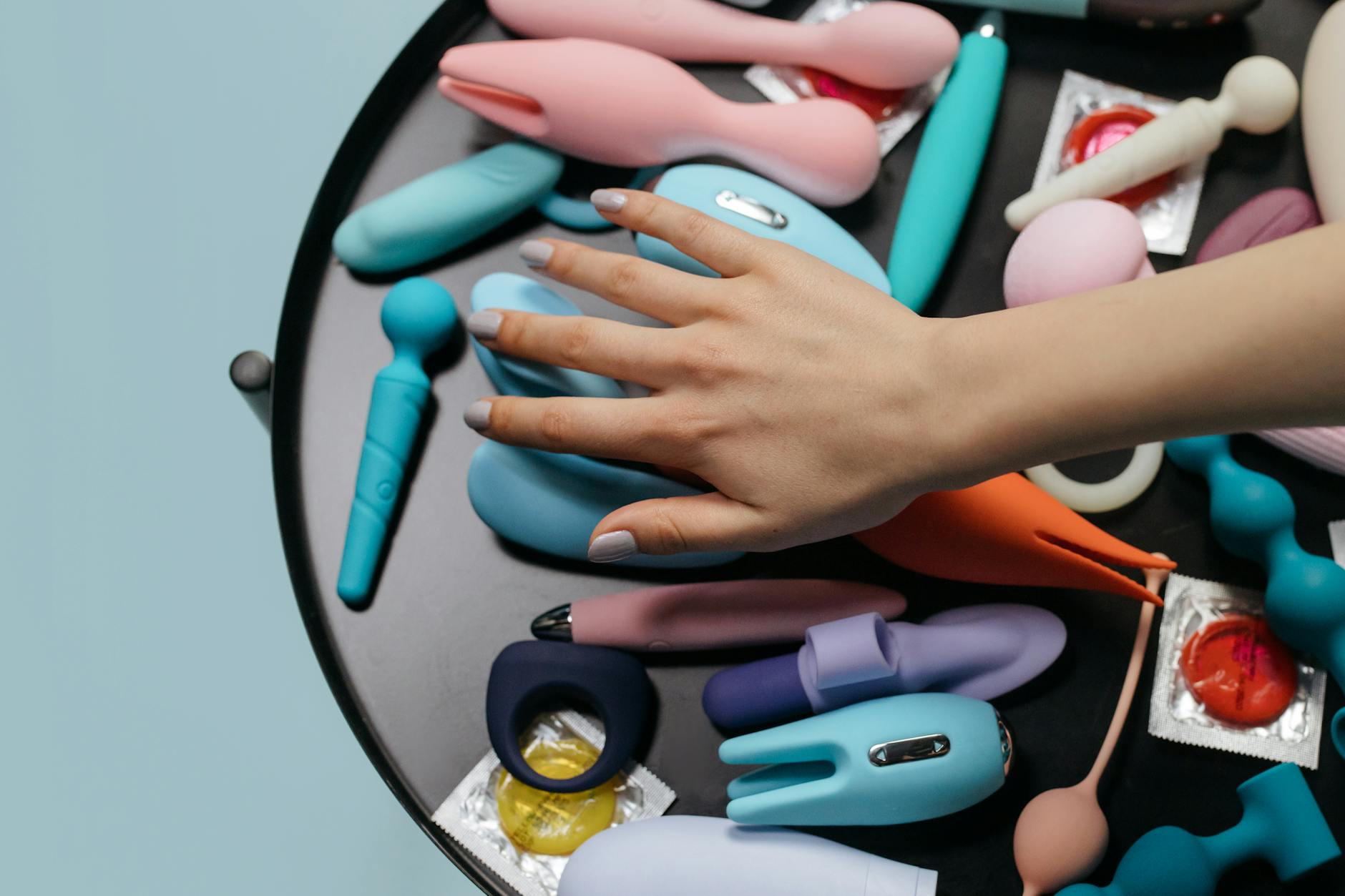
Photo by cottonbro studio on Pexels
What your partner can do while you're reconnecting
This part is critical because most partners freeze up or leave the room. Both of those responses come from good places, but neither actually helps.
Your partner can be present without performing. They can sit with you, hold your hand, watch your face, remind you they're there. They can ask you questions afterward. "How did that feel?" "What did you notice?" "Do you want to do this again next week?"
If your partner is ready to participate, they can touch you in ways that don't involve genital contact. They can kiss your neck, massage your shoulders, be close to you while you use your lemon vibrator. This keeps the intimacy intact while honoring their recovery timeline.
Some couples find that one partner using a vibrator while the other is inside them works beautifully. This requires communication about pressure and comfort, but it's a real option once both of you are ready to try it.
Setting boundaries that protect both of you
Here's what often happens next. The faster-healing partner gets excited and wants more. The slower one feels pressured again. Or the slower partner starts feeling like they're failing and withdraws completely.
Build boundaries before you need them. Decide in advance how often you'll use your lemon vibrator together. Decide if this is for solo pleasure or partnered closeness. Decide what happens if one of you isn't feeling it on a given day.
Then stick to those boundaries even when you want to break them. Especially then, honestly. The slower partner needs to know that this pace is safe. The faster partner needs to know that their need for pleasure is legitimate. Both of those things are true, and they can coexist.
What changes as you both keep healing
Some couples find that once they start using lemon clitoral vibrators together, the gap between their recovery timelines closes faster. Others find the gap stays wide, and that's fine too. There's no timeline for this part.
What usually shifts is the emotional landscape. You stop treating recovery like a ticking clock. You stop seeing pleasure as something you're denied and your partner is denying you. You start treating it like two people figuring out how to exist together in a way that works for right now.
That mindset change is where the real reconnection happens. The lemon vibrator is just the tool that makes the conversation possible.
When to get outside support
If one partner is consistently refusing to acknowledge the other's needs, or if resentment is building no matter what you try, that's the moment to bring in a couples therapist. There's nothing wrong with needing help navigating this. Most relationships do at some point.
A couples therapist can help you see patterns you're too close to recognize. They can hold space for both of your needs without taking sides. They can help you remember why you connected in the first place, before recovery became the only story you were telling.
People also ask
How do I know if my partner is actually ready for me to use a vibrator or just saying yes to make me happy?
Watch their body language and follow up later. Ask them specifically, "If you weren't worried about my feelings, how would you actually feel about this?" The answer you get to that question is usually more honest than the initial yes. If your partner genuinely isn't comfortable, pushing them will create resentment. Honor that, even if it's frustrating.
Can we use a lemon vibrator together if my partner is still in physical pain?
Yes, but start with their comfort as the absolute priority. They can hold your hand, kiss you, or just be nearby while you use it. There's no rule that says both partners have to be actively involved. Some couples find that just being in the same room feels intimate enough while one partner is still healing.
What if using a lemon vibrator makes my partner feel replaced or inadequate?
This is real and worth addressing directly. Explain that a toy isn't a replacement for them. It's a way for you to feel pleasure without needing your partner to perform or be ready. Frame it as something that helps you both feel less pressure, not something that bypasses them. If the insecurity persists, therapy can help.
How long does it usually take for couples to get back to "normal" after recovery?
There is no normal timeline, and honestly, trying to get back to how things were before often causes more problems than it solves. Instead, aim for a new version of coupled sexuality that fits both of you now. That might look completely different, and that's actually healthy.
Is it okay to use a lemon clitoral vibrator if I'm not sure what I want yet?
Absolutely. Pleasure is a form of exploration. You don't need to have all the answers before you start. You discover what you want by trying things and noticing what feels good. That's not selfish. That's you learning your own body again after disruption.
What if my partner gets jealous about me using a vibrator?
Jealousy usually masks fear. They might be scared you'll prefer the vibrator to them, or that your desire will move away from them entirely. Reassure them that pleasure with a tool is different from pleasure with a partner, not better. Invite them into the experience rather than hiding it. Transparency reduces jealousy more than secrecy ever does.
The real work is the conversation
The lemon vibrator is a tool. The real work is deciding you're both worth pleasure, even when you're on different timelines. It's agreeing that your body matters and your partner's recovery matters and those things don't have to be in conflict.
Start with the conversation. Then see what's possible.
If you want to work through relationship dynamics more deeply, reach out to talk with us about what's happening in your specific situation. We're here to help you navigate the messy middle ground where most real relationships actually live.