Starting over is harder than people admit
There's something uniquely vulnerable about pleasure with someone new. You don't know yet what they find attractive. You're still learning your own body after time away or after someone else's rhythm became your default. There's pressure to perform, to be into the same things, to prove you're still capable of desire. Most of us skip right past that discomfort and pretend we're ready for the kind of spontaneous, effortless sex that happens in movies. Then we feel disappointed in ourselves when it doesn't click immediately.
Here's what actually helps. A lemon vibrator isn't about replacing connection with your partner. It's about establishing your own baseline first. What feels good to you, solo. What rhythm you actually prefer. What intensity makes you relax instead of tense up. Once you know that, introducing a lemon clitoral vibrator into partnered time becomes a conversation tool, not a threat or a workaround.
Why lemon vibrators change the dynamic with someone new
Traditional vibrators are loud, intense, and demanding of attention. They require you to commit to a single pattern or intensity level. That works fine once you're confident in your own pleasure. When you're learning someone new, you often need something different. You need to be able to keep some attention on your partner. You need a tool that doesn't require explanation before use.
Lemon vibrators use suction rather than vibration. The sensation is gentler, more gradual, less likely to trigger the "performance mode" that kills arousal early on. Because the stimulation is less intense than traditional vibrators, you can use it for longer without overstimulation. That extended time together, without racing toward a finish line, is exactly what new relationships need to build real intimacy. You're learning each other's rhythm instead of fighting against vibration patterns.

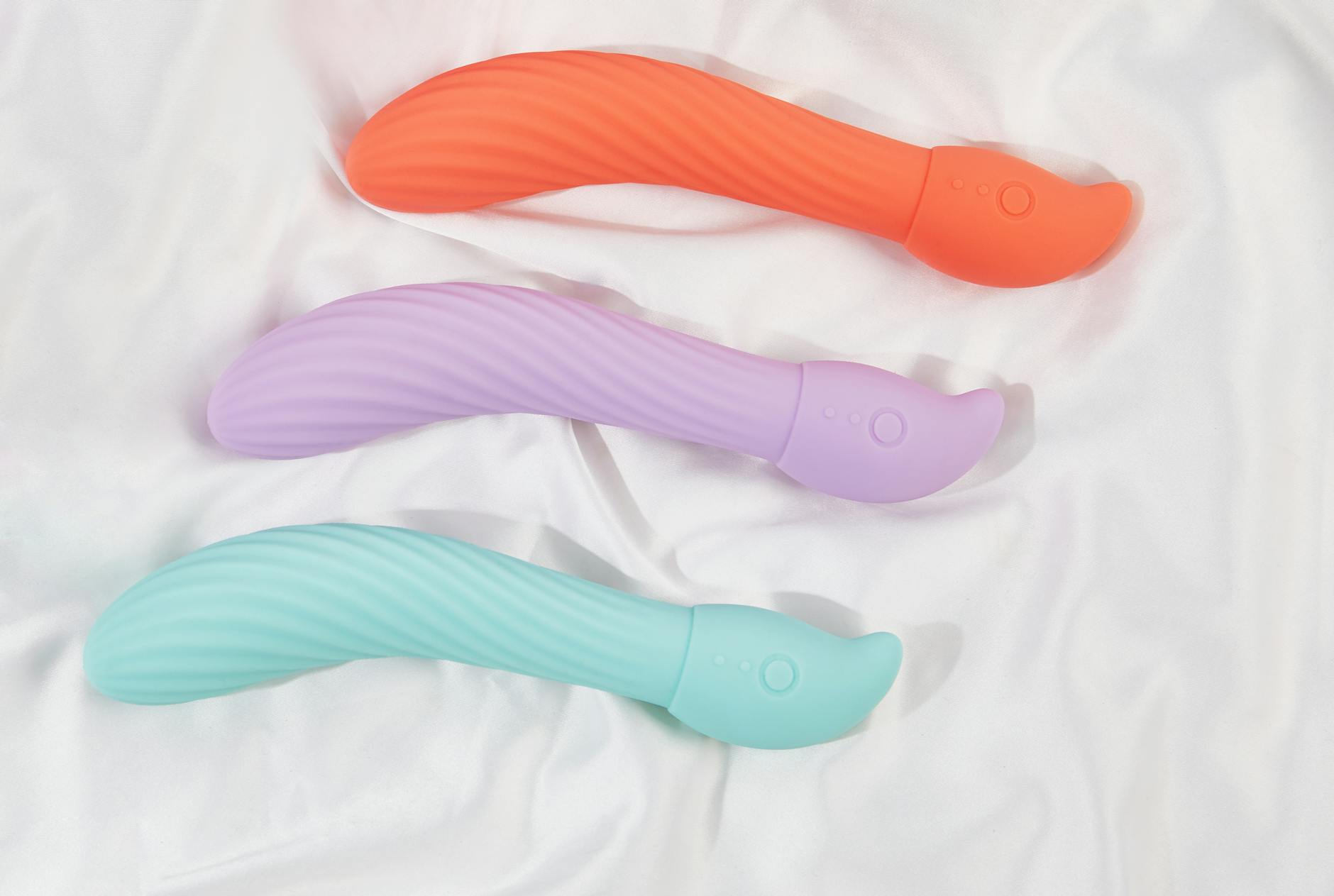
Photo by Anna Shvets on Pexels
The other advantage is psychological. If you've been away from partnered pleasure for a while, your brain might be holding a lot of doubt. "Will this still work for me?" "Am I still interested?" "What if I can't come?" Using a lemon sucker solo first, in your own space, answers those questions privately. You get proof that your body still responds. That confidence shows up in your body when you're with your partner. They feel less pressure. You feel less urgent. Everyone breathes.
The solo phase: building your own blueprint
Before introducing anything to a new partner, spend time learning what your current body wants. This isn't selfish. This is foundational.
Start with a lemon vibrator alone over the course of a week or two. Use it at different times of day. Notice when you have more energy, when you're more responsive, whether mornings or evenings suit you better. Pay attention to what fantasies or mental images help you relax into sensation. Notice how long arousal usually takes to build for you right now. Your body has a baseline, and it may have shifted since the last time you had regular partnered sex.
This solo practice does three things. First, it confirms that you're still capable of pleasure, which reduces the anxiety you bring into the bedroom with someone new. Second, it gives you language. "I usually need about 15 minutes to really get into it" is so much easier to say than "I'm just not feeling it" when you actually know it's true. Third, it proves to yourself that you don't need anyone else's touch to feel good. That's the foundation of confident pleasure with a partner.
The conversation that happens before clothes come off
Once you're ready to include your partner, the conversation matters more than the toy. Here's what actually needs to be said.
"I want to try something that helps me relax and explore what feels good right now. It's not a replacement for you. It's actually so I can be more present and responsive with you." That sentence does most of the work. It frames the lemon vibrator as a tool for connection, not a substitute for it.
Then be specific. "I'm going to use this when we're together so I can show you what works for me." Or, "I'd like you to hold it while we're close, so we're doing it together." Or, "I want to use this solo first while you watch, and then we can talk about what felt good." Different approaches work for different couples. The point is that your partner knows what's happening and why.
If your partner seems threatened or dismissive, that's useful information about your relationship, not about the vibrator. A secure partner understands that your pleasure is a gift to them, not a competition. If someone gets defensive about you knowing your own body, that's a yellow flag worth examining.
Making it work together: three common setups
Once you've both agreed, there are a few ways to integrate a lemon clitoral vibrator into partnered time.
You lead, they support. You hold the vibrator, control the rhythm and intensity, and your partner touches you elsewhere. Your hand, their hands, their mouth. This keeps you in charge of your own sensation while building connection through their touch. You're showing them what you like in real time, and they're meeting you there.
They lead, you guide. They hold the lemon vibrator while you give feedback. "A little slower, more pressure, move slightly left." This works well if you like being touched but want to explore a new sensation, or if you want to share the pleasure without the performance pressure of managing the tool yourself.
Parallel play. You use the vibrator while your partner is inside you or while you're both touching. This is less about control and more about the feeling of the suction combined with other sensations. This usually comes later, once you're both comfortable, because it requires less communication in the moment.
None of these is better. Different partners, different bodies, different relationship timelines call for different approaches. What matters is that you try one, check in, and adjust.
The sensations to expect (and why they might surprise you)
If you're used to traditional vibrators, a lemon vibrator will feel different. Suction is quieter, more localized, and less tingly. Some people find it more intense because the stimulation is concentrated. Others find it gentler because there's no buzzing sensation that can feel overwhelming on sensitive tissue.
With a new partner nearby, you might notice that your body responds differently than it does solo. Your breathing might change. Your arousal might build slower or faster depending on how safe you feel. That's completely normal. You're learning your body's response not just to the toy, but to intimacy with this specific person. Pay attention to that. It's valuable information.
If something doesn't feel good, stop. There's no prize for pushing through discomfort with a new partner. "This isn't quite right, let's try something else" is a perfectly complete sentence.
Beyond the first time
As you continue with a new partner, the lemon vibrator becomes just another part of your shared vocabulary. You might use it sometimes, skip it other times. You might discover you prefer it paired with a certain touch, or at a certain point in your cycle. The goal isn't to make it essential. The goal is to have explored your own pleasure clearly enough that you're not guessing in the dark about what your body needs.
Over time, partners often become more creative with how they use these tools. Some couples explore using the lemon sucker during foreplay as a way to build sensation before other kinds of touch. Others use it as a way to extend the experience when time is limited. The fact that it doesn't require batteries or charging makes it practical for spontaneous moments.
Most importantly, using a lemon vibrator with a new partner sends a clear message: your pleasure matters. You're not here to perform or to pretend you're more ready than you are. You're here to figure out what actually feels good in this specific relationship, at this specific moment in your life. That vulnerability, that honesty, is actually what creates real intimacy. The vibrator is just the vehicle.
FAQ: Your questions answered
Will using a vibrator with a new partner make them think I'm not attracted to them?
No. A partner secure in themselves understands that your pleasure and their attractiveness aren't mutually exclusive. If anything, your willingness to explore sensation with them is an act of trust. Insecurity might flare up, and that's worth talking through. But a good partner gets it. Your body responding better to sensation isn't a comment on them. It's a comment on you learning what works.
How do I bring up using a lemon vibrator without making it weird?
The less you treat it like a big deal, the less weird it becomes. "I want to try something that might help us both" works. You can frame it as something you're curious about, not something you need. If you're nervous, start with something smaller. "I've been reading about suction stimulation and I'm interested" is honest and opens conversation without pressure.
What if my partner wants to use it and I don't?
That's fine. You're not required to use something because your partner finds it appealing. You can support their exploration without participating. "I love watching you feel good" is complete. Over time, curiosity might develop. Or it might not. Both are okay.
Can I use a lemon vibrator if I'm still figuring out my sexuality with this partner?
Absolutely. A lemon clitoral vibrator doesn't require you to know what you like before you start using it. It's actually a great tool for exploration because it gives you clear, non-judgmental feedback. If something feels good, your body will tell you. If it doesn't, you'll know that too. That information helps you understand yourself, which helps you communicate better with your partner.
How long should we wait before introducing a vibrator into partnered time?
There's no timeline. Some couples want to explore together from early on. Others wait months. What matters is that you both feel safe enough to be honest. If either of you is performing or hiding, that's probably too early. If you both feel like you can say "that didn't work for me" without defensiveness, you're ready.
What if we try it and it doesn't improve things?
Then you have valuable information. A vibrator isn't a fix. It's a tool. If the issue is connection, communication, or attraction, no toy solves that. But if the issue is that you're both a little lost about what actually feels good, a lemon vibrator helps you find your way. If you use it and things still feel off, that's worth exploring as a couple or with a therapist who specializes in couples' intimacy.
You deserve pleasure that's on your terms
New relationships come with real uncertainty. You're learning someone new. You're reintroducing yourself to partnered intimacy. You're figuring out whether this person can handle your realness, your needs, your actual body and not the one you think you should have.
A lemon vibrator isn't magic. It won't fix a relationship that's built on poor communication. It won't create attraction that isn't there. But it will give you clarity about what your body wants right now, and it will invite your partner into that exploration with you instead of asking you to figure it out alone or to pretend you already know.
That honesty, that willingness to be uncertain together, is actually what builds lasting intimacy. The vibrator is just a very good excuse to start.