Here's what anxiety does to your body
Your brain decides pleasure isn't safe right now. That's not a character flaw. That's your nervous system doing its job, which is to protect you. When you're in a state of hypervigilance or chronic worry, blood flow redirects away from your genitals and toward your muscles. Your pelvic floor tightens. Arousal feels impossible. You can want it intellectually and still feel completely numb.
The cruel part is that numbness then creates more anxiety. You think there's something wrong with you. There isn't. You're just stuck in a loop where your body won't cooperate because your mind won't quiet down.
What matters is understanding that anxiety and pleasure literally cannot coexist in the same nervous system state. You can't force your way through. But you can shift the state.
Why traditional vibrators often make anxiety worse
A bullet vibrator buzzes constantly at high intensity. If your nervous system is already in threat mode, that relentless stimulation can feel overwhelming rather than pleasurable. It's too much input when your brain is already running at maximum capacity. Many of my clients with anxiety say traditional vibrators feel like trying to focus on pleasure while someone's tapping your shoulder repeatedly. It's distracting, not helpful.
That's where the design of lemon clitoral vibrators changes things. Suction-based stimulation works differently on your nervous system than vibration does.
How suction rewires your arousal response
Suction creates a gentle, rhythmic pressure that mimics the sensation of oral contact. Your nervous system recognizes this as safe, intimate stimulation. Unlike a high-frequency buzz, suction doesn't demand your attention. It invites it. The rhythm is slow enough that your brain can sync with it rather than being overwhelmed by it.
When you use a tool like the Lemon vibrator, you're also introducing a pattern that's psychologically easier to surrender to. There's a beginning, a middle, and a rise. Your anticipatory system engages instead of your threat detection system. That's the shift you need.
Second, suction stimulation activates a different neural pathway than vibration. It's associated with more sustained arousal rather than the quick spike-and-plateau pattern of traditional vibrators. For anxious brains, sustained arousal is actually easier to maintain because there's less pressure to "perform" or "get there."
Building safety before pleasure
The mistake people make is jumping straight to arousal when anxiety is present. You can't. You have to build safety first, and pleasure comes after.
Start in an environment where interruption is genuinely impossible. Not just unlikely. Genuinely impossible. Lock the door. Silence your phone. Close the browser tabs. Tell your partner you need 45 minutes alone. Your anxious brain needs concrete proof that you're safe before it will allow any vulnerable response.
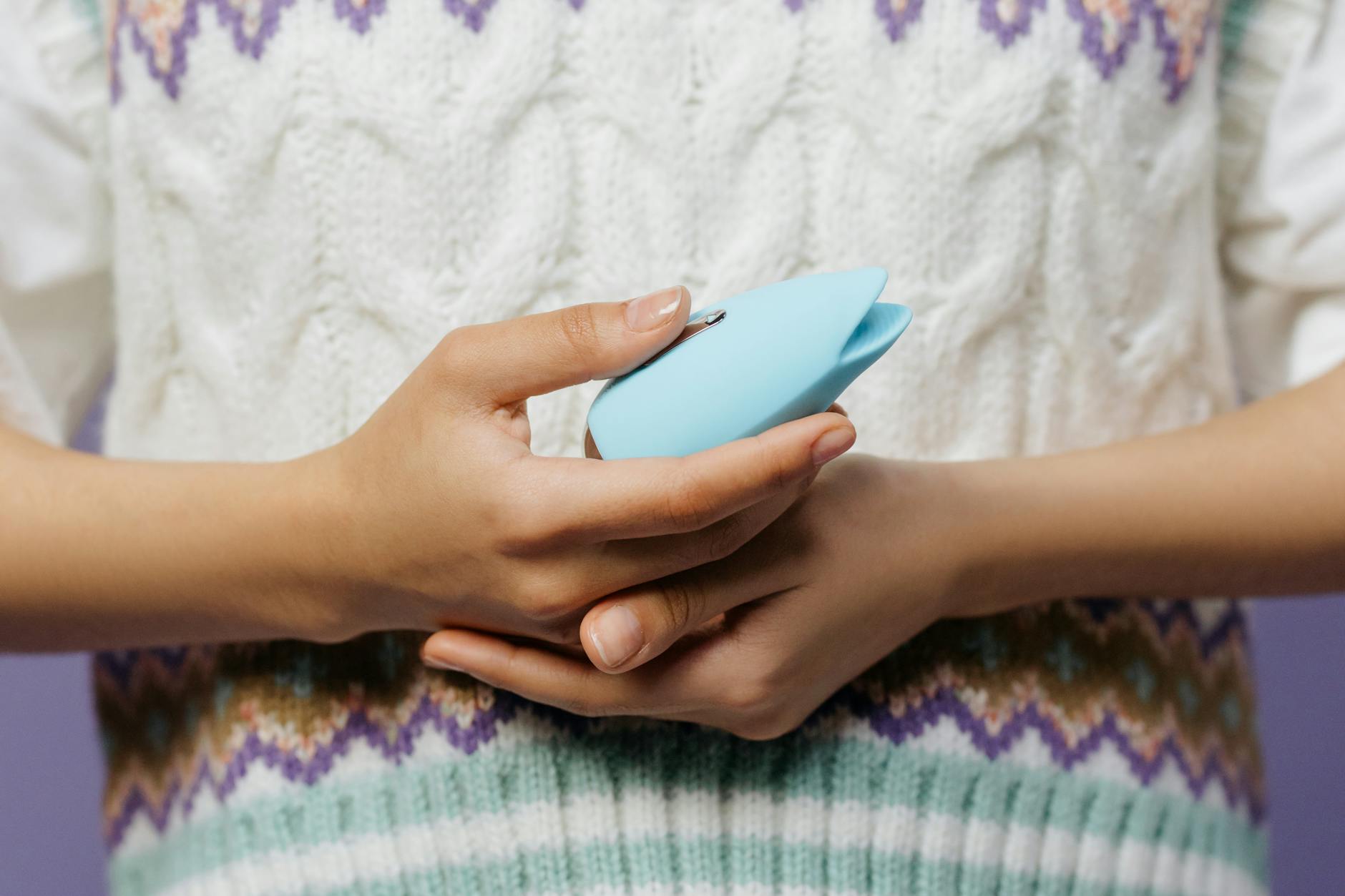
Then spend time just noticing your body without expecting anything from it. This is where lemon clitoral vibrators have an unexpected advantage. You can hold one, experience its weight, feel its texture. It's a tactile anchor. You're grounding yourself in the present moment rather than spiraling into what-ifs.
Many people with anxiety find that simply holding a toy and feeling its shape helps settle their nervous system. The sensory input is predictable. There's no threat in predictability.
The protocol that actually works
Here's the sequence I recommend to clients dealing with anxiety.
Step one: Breathing and body awareness. Before you touch the toy, spend five minutes on deliberate breathing. Inhale for four, hold for four, exhale for six. The extended exhale signals safety to your vagus nerve. Then, without any goal, simply notice what your body feels like. Not what it should feel like. What it actually feels like.
Step two: Introduction without expectation. Hold the Lemon vibrator. Don't turn it on yet. Feel the material, the weight, the cool surface. Let your nervous system catalog this as safe.
Step three: Low-intensity engagement. When you're ready, turn on the lowest setting. This is not about building toward pleasure. It's about proving to your nervous system that this stimulus won't overwhelm you. Spend 3-5 minutes just experiencing what low-intensity suction feels like. If anxiety spikes, you can stop immediately. You're building proof that you're in control.
Step four: Curiosity, not pressure. As your nervous system settles, you can gradually explore higher settings, but only if you feel like it. The moment you feel like you "should" be feeling something, pause. Pressure kills arousal when anxiety is present.
Many people need to do this multiple times before pleasure actually shows up. That's not failure. That's your nervous system learning that this is safe. Repeat it until pleasure doesn't feel like a goal.
What to do when anxiety spikes mid-session
It will sometimes. That's normal.
The moment you feel your mind racing or your chest tightening, pause immediately. Turn off the toy. Take three very slow breaths. Here's the crucial part: don't try to push through or reassure yourself that "it's fine." Your nervous system doesn't believe you. Instead, ground yourself in the immediate physical environment. Name five things you can see, four things you can touch, three things you can hear. This is a grounding technique that activates your parasympathetic nervous system and tells your brain you're actually safe.
Then decide: do you want to try again, or do you want to stop? Both are valid. If you keep going, you're teaching your nervous system that it can feel unsafe and you'll still respond with care. That's incredibly powerful for healing anxiety.
The role of partnered use when anxiety is present
If you have a partner, they can be part of this but only if they understand the goal. The goal is not to create a sexual experience. The goal is to help you reconnect with pleasure in a way your nervous system can tolerate.
This means your partner needs to understand that they're not performing, not orchestrating, not directing. They're creating safety and witnessing. That might mean they're just present in the room while you explore the Lemon vibrator alone. It might mean they hold your hand while you use it. It might mean they help you set up the environment and then step back.
Many partners feel excluded or like they're "not enough" when you need a different type of stimulation. This is where you need to have the conversation that how to introduce lemon vibrators to your partner without awkwardness is really about building trust, not about replacing them.
When anxiety is medication-related
If your anxiety is being managed with SSRIs or other medications, you're dealing with a different layer. Those medications can also dull sensation and arousal. In that case, you're not just rewiring your nervous system. You're also compensating for the medication's effects.
Lemon vibrators are particularly useful here because suction creates stronger sensory input without requiring you to rely solely on genital sensation. You're engaging multiple sensory channels at once. This is one reason why how to use lemon vibrators for better sensation after antidepressants is such a common question. The medication slows things down, and the tool helps bridge that gap.
If you're on medication, don't stop taking it to fix this problem. Instead, work with the reality that sensation and arousal might feel different. The Lemon vibrator's design actually works with that constraint rather than against it.
Why patience matters more than intensity
The fastest way to fail at this is to approach it with the same urgency and intensity that drives your anxiety. Your anxious brain loves urgency. It treats it as danger.
Slow down deliberately. Treat this like meditation, not like sex. Some sessions you'll feel nothing. Some sessions you'll feel a flicker. Some sessions you'll actually feel arousal. All of those are data points. None of them are failures. Your nervous system is learning that pleasure is available and safe.
Most people take two to four weeks of consistent, patient exploration before genuine arousal starts returning. That's not slow. That's how long it takes for your nervous system to update its threat assessment.
FAQ: Anxiety and Pleasure
Can anxiety permanently damage your ability to feel pleasure?
No. Your capacity for pleasure is still there. It's just gated off by your nervous system while you're in a threat state. That gate can reopen. It takes patience and consistency, but it's absolutely reversible. Plenty of people rebuild their pleasure after years of anxiety-driven numbness.
Is it normal to feel nothing even with a lemon vibrator?
Completely normal when anxiety is high. You're asking your body to feel sensation while your brain is convinced you're in danger. That's a losing battle. That's why the grounding and safety work matters more than the tool. The tool is just the anchor point.
Should I use a lemon vibrator or a traditional vibrator if anxiety is my main issue?
Start with the Lemon vibrator. Suction-based stimulation is gentler on an anxious nervous system than high-frequency vibration. It doesn't demand your attention the same way. That matters when your attention is already fragmented.
Can my partner using a lemon vibrator on me help with anxiety?
Maybe eventually, but not at first. When anxiety is high, you need to be the one in control of the stimulation. You need to be able to stop instantly without negotiation. Once you've rebuilt some pleasure alone, partnered use becomes possible and can actually deepen intimacy.
What if medication is the cause of the numbness, not just anxiety?
You might be dealing with both. Anxiety tightens your nervous system. Medication can numb it. A suction-based tool like the Lemon vibrator addresses the numbness better than traditional vibrators because it creates stronger sensory input without relying on high frequency. See how to use lemon vibrators for better sensation if you're on medication for more on this specific scenario.
How do I know if I'm making progress if I can't feel much?
Progress isn't about intensity of sensation. It's about how your mind feels. Are you less afraid? Are you spending more time with the toy without panic? Are you able to pause without shame? Those are signs your nervous system is updating. Sensation will follow.
The threshold moment
There's a point in this process where something shifts. Your nervous system stops treating pleasure as a threat. It might happen during a session, or it might happen in an ordinary moment days later. You'll notice suddenly that you feel a little spark of desire. It'll feel fragile and confusing at first. That's okay. You're not supposed to protect it or force it. You're just supposed to notice it and let it be there.
That spark is your body telling you it's ready. The Lemon vibrator has been waiting for that moment. And when it happens, pleasure comes back not as something you have to achieve but as something that's simply available again.