Let's address the thing nobody talks about
Long breaks from sex happen. Life happens. Illness, grief, medical procedures, a relationship ending, depression, medication changes, raising young kids in survival mode. You step away for what feels temporary, and then weeks become months, months become years, and somewhere in that time the idea of your own pleasure starts feeling foreign. Not wrong. Just... distant.
Here's what I know after years of working with couples and individuals navigating this exact space: your body hasn't forgotten how to feel good. It's just been quiet. And reawakening that capacity doesn't require shame, force, or a perfect partner. Sometimes it just requires patience, the right tool, and permission.
Why the return feels harder than the beginning
When you first had sex, curiosity did most of the work. Your body was responding to novelty, hormones, the thrill of the unknown. A long break rewires some of that. Your nervous system settles into a baseline of non-sexual touch. Your pelvic floor, which has muscle memory just like any other muscle, tightens. Your brain stops sending the same chemical signals that used to arrive on their own.
That's not damage. That's adaptation. And adaptation reverses with gentle, consistent attention.
Adding to that: shame is a real blocker. If you've been away from your body for years, there's often a story attached. You weren't attractive enough. Your partner didn't want you. You were too tired, too stressed, too broken. None of that is true, and all of it lives in your nervous system like background noise until you deliberately turn it down.
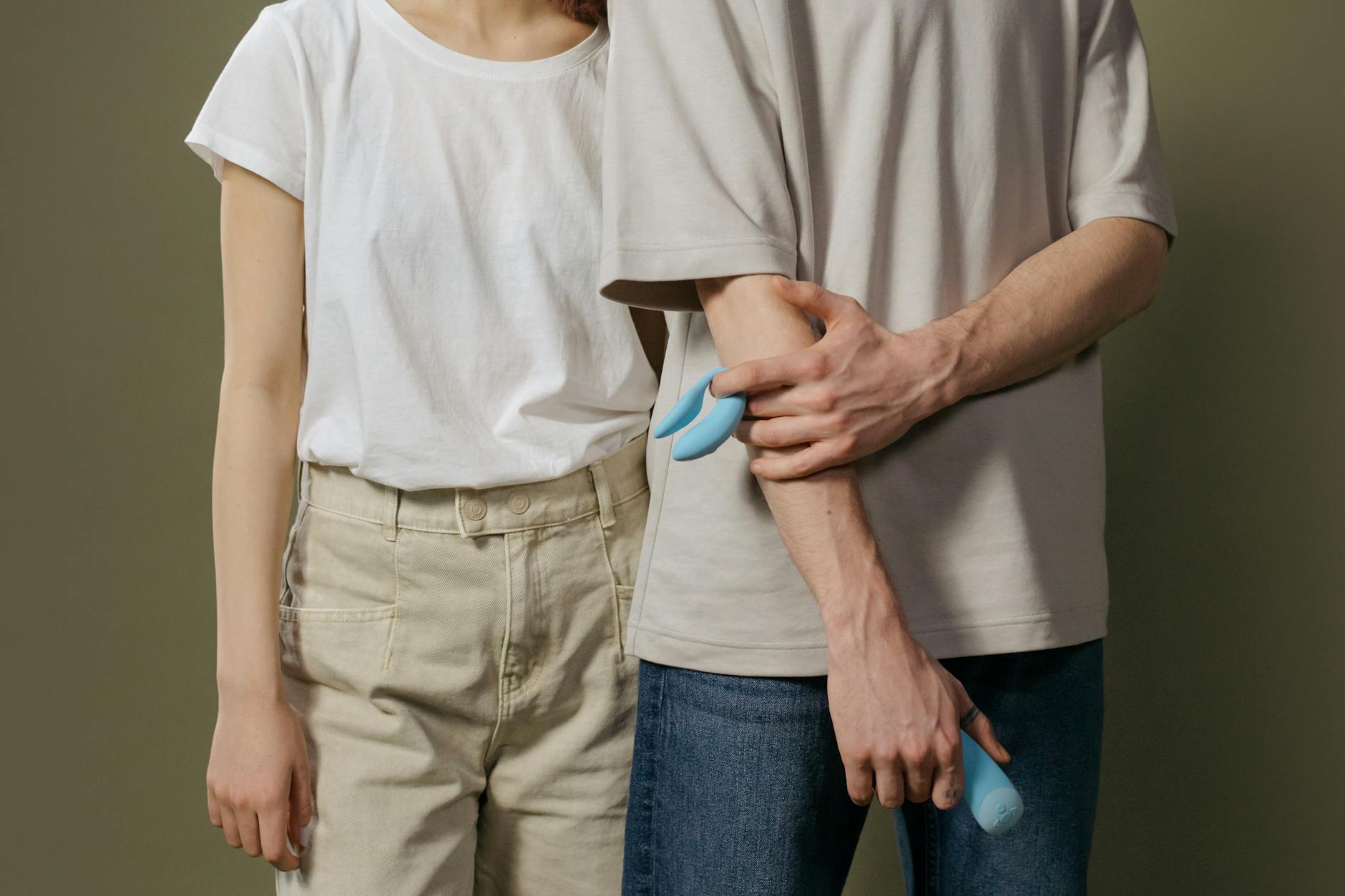
Lemon vibrators, specifically the air-suction designs like the Lemon Clitoral Vibrator, are excellent entry points back to sensation because they work with your body's current responsiveness, not against it. They don't demand that you be "turned on" before you use them. They help build arousal from a resting state.
Building your comfort baseline before trying anything
If you've been away for a long time, your first goal isn't orgasm. Your first goal is sensation without judgment.
Start by touching your own vulva when you're clothed, in a safe space, with zero expectations. Not in a sexual way. Just noticing. What does the pressure of your hand feel like? Does any spot feel numb? Does anything feel tender? Spend three to five minutes on this, three or four times before you move to the next step.
Then, same thing, with underwear off. Same neutral awareness. No goal of arousal. Just data.
If touching yourself directly feels too vulnerable, that's information too. Some people need to build safety in layers: hands on your belly first, then inner thighs, then the outer vulva, then inward. There's no speed here. You're not racing toward orgasm. You're teaching your nervous system that this is safe territory.
This usually takes one to three weeks. That's not slow. That's smart.
Introducing the Lemon Clitoral Vibrator safely
Once you've spent time with your own hand and you're not experiencing sharp pain or dissociation, it's time to introduce the vibrator.
Start with the lowest setting. Most people who've been away from pleasure are shocked at how intense even "gentle" vibration feels on a clitoris that hasn't been stimulated in years. You're not weak. Your nerve density is exactly as it always was. Your nervous system is just reacting to an unfamiliar stimulus.
Hold the vibrator close but not directly on your clitoris at first. Try it on your inner thigh. Your labia. The area around your clitoris. Let your body register the sensation without the intensity of direct contact.
There's no timeline for this either. Some people spend a week exploring the vibrator on the surrounding area before they're ready for direct contact. Others move faster. Both are fine.
What actual responsiveness looks like after a break
You might not get immediate lubrication. You might not feel a clear buildup toward orgasm. You might feel arousal peak and then flatten and then peak again. You might feel more sensation in one session than the next. None of this is unusual for someone rebuilding their relationship with their own pleasure.
Arousability isn't constant. It's influenced by stress, sleep, where you are in your cycle, what you ate, how much water you've drunk, what you're thinking about, the ambient temperature. When you've been away for a long time, you're also learning your body's signals again, which takes time.
Many people find that a water-based lubricant helps, even if their body would normally produce enough on its own. There's zero shame in that. Lubrication is a tool, not evidence that something's wrong.
The nervous system piece (the part that actually matters most)
Your body can't access pleasure if your nervous system is stuck in survival mode. If you're tense, holding your breath, tracking time, waiting for the "right" feeling to happen, your brain is not available for sensation.
Before each session, spend two minutes on your breath. In for four, hold for four, out for six. Do this lying down, somewhere you feel safe. This signals to your vagus nerve that the threat is passed and it's okay to rest.
During your time with the vibrator, if you notice you're holding tension in your shoulders, jaw, or belly, pause and breathe. This isn't a pause that means something's wrong. It's maintenance. You're teaching your nervous system that pleasure is a safe state to be in.
If you start to feel disconnected from your body during stimulation, that's a cue to stop, breathe, and come back when you're more regulated. Dissociation is your nervous system's way of saying "this is too much, too fast." Respect that signal.
Realistic timelines and what success actually looks like
You won't rebuild your relationship with pleasure in a week. You probably will feel a noticeable shift in sensation and responsiveness within two to four weeks of consistent, gentle exploration. By eight weeks of regular practice, most people report that their body is responding noticeably differently.
Orgasm might take longer. Some people find that their first orgasms after a long break feel different, smaller, or more concentrated than they remember. Others find them intensely strong. There's no "correct" version.
Success at this stage isn't about the intensity or frequency of orgasms. Success is your body feeling like home again. It's the ability to think about your own pleasure without shame. It's noticing sensation without judgment. It's remembering that this part of you still exists.
If you have a partner, you don't owe them access to this process. This is yours first. Rebuilding your relationship with your own pleasure is the foundation. Sharing it with a partner is a separate conversation that comes later, when you're ready.
When to reach out for help
If you're experiencing pain that doesn't ease with gentle exploration and lubrication, talk to a gynecologist. Pain isn't a normal part of the rebuild process. It's a signal that something needs professional attention.
If you're feeling persistently disconnected from your body even after weeks of gentle practice, a therapist who specializes in somatic work or sexual health can be genuinely helpful. Sometimes the nervous system needs professional support to fully resource itself.
If shame or guilt is blocking you at every turn, that's also worth bringing to therapy. You don't have to white-knuckle your way through this alone.
FAQ
How long does it actually take to feel responsive again after a long sexual break?
Most people notice shifts in sensation within two to four weeks of consistent, gentle exploration. Deeper reconnection often takes eight to twelve weeks. But "normal" doesn't apply here. Your timeline is yours. Some people move faster; others need more time. The key is consistency, not speed.
Can lemon clitoral vibrators help if I've lost all sensation down there?
Complete numbness is less common than people think. What's more common is dampened sensation. Lemon vibrators, especially air-suction models, can help rebuild nerve awareness because they work differently than traditional vibration. They stimulate nerves through suction and pressure rather than direct friction, which often feels more accessible to bodies that have been inactive. That said, if you're experiencing true numbness, see a gynecologist first to rule out underlying nerve or circulation issues.
What if I feel nothing even with the vibrator on the highest setting?
That's not failure. That's data. Stop, breathe, and try again another day. Sometimes your body needs more time. Sometimes the issue is nervous system activation, not the vibrator. If numbness persists after four weeks of regular practice, talk to a healthcare provider. Medication side effects, hormonal changes, or past trauma can all affect sensation in ways that need professional support.
Is it normal to feel anxious or weird using a vibrator after being away for so long?
Completely normal. You're reintroducing yourself to a part of your sexuality that's been dormant. Anxiety is your nervous system's way of flagging "something new is happening." Slow down. Breathe. Remind yourself that this is safe. You're in control. You can stop whenever you want. Anxiety usually settles once your nervous system trusts that the situation is genuinely safe.
Should I tell my partner I'm using lemon vibrators to rebuild my sexuality?
That's your call. This time is for you first. Some people find that rebuilding their relationship with their own pleasure in private helps them show up differently with a partner later. Others want to include their partner from the beginning. There's no right answer. What matters is that you're not doing this because you feel obligated to. You're doing it because you want to know yourself again.
Can I use lemon vibrators if I've had trauma that makes sex feel unsafe?
It depends on the trauma and where you are in your healing. If sex feels unsafe, that's a sign to work with a trauma-informed therapist before introducing any sexual tools. Pleasure-based exploration can be incredibly healing, but it needs the right foundation. A therapist can help you build safety in your body first, and then tools like the Lemon Clitoral Vibrator become part of a larger healing process, not a substitute for it.
The real work here
Coming back to your own pleasure after a long absence isn't just physical. It's an act of reclaiming yourself. It's saying that your body matters, that your sensation matters, that you're worth the time and attention required to rebuild this connection.
Take it slow. Use lemon sexual toys as one part of that rebuilding. Show yourself the same patience you'd show a good friend starting over. Your body hasn't forgotten. It's just been waiting.