Let's start here: nothing's wrong with you
If your lemon clitoral vibrator suddenly feels less intense, or if your body needs more warm-up time to respond, or if the sensation that used to work in 30 seconds now takes longer—that's not failure. That's perimenopause talking, and it's wildly common. Hormonal shifts change how your nervous system interprets stimulation. They don't erase your capacity for pleasure.
Most people don't get told this clearly, so I'm telling you now: air-suction vibrators like the Hello Nancy lemon clitoral vibrators actually work better during perimenopause than traditional vibration alone. I'll explain why in a moment.
What perimenopause does to clitoral sensation
Estrogen and progesterone are dropping unpredictably. This affects nerve signaling in the clitoris and vulva in three specific ways.
First: blood flow becomes less stable. The clitoris engorges less quickly when aroused, which means sensation builds slower. You're not less capable of orgasm—the ramp-up just changes.
Second: the tissue covering the clitoris gets thinner as estrogen drops. This sounds scary but it's actually why air-suction vibrators become so effective. Suction doesn't rely on sustained direct friction against delicate tissue. It creates a pressure gradient that stimulates the entire clitoral system—internal and external—without the grinding friction that can feel raw or irritating.
Third: your threshold for overstimulation shifts. Some people find they need gentler patterns; others find that traditional vibration feels numb and actually prefer the complexity of air-suction stimulation. This varies wildly person to person, which is why you can't trust blanket advice.
Why lemon sucker designs work better in perimenopause
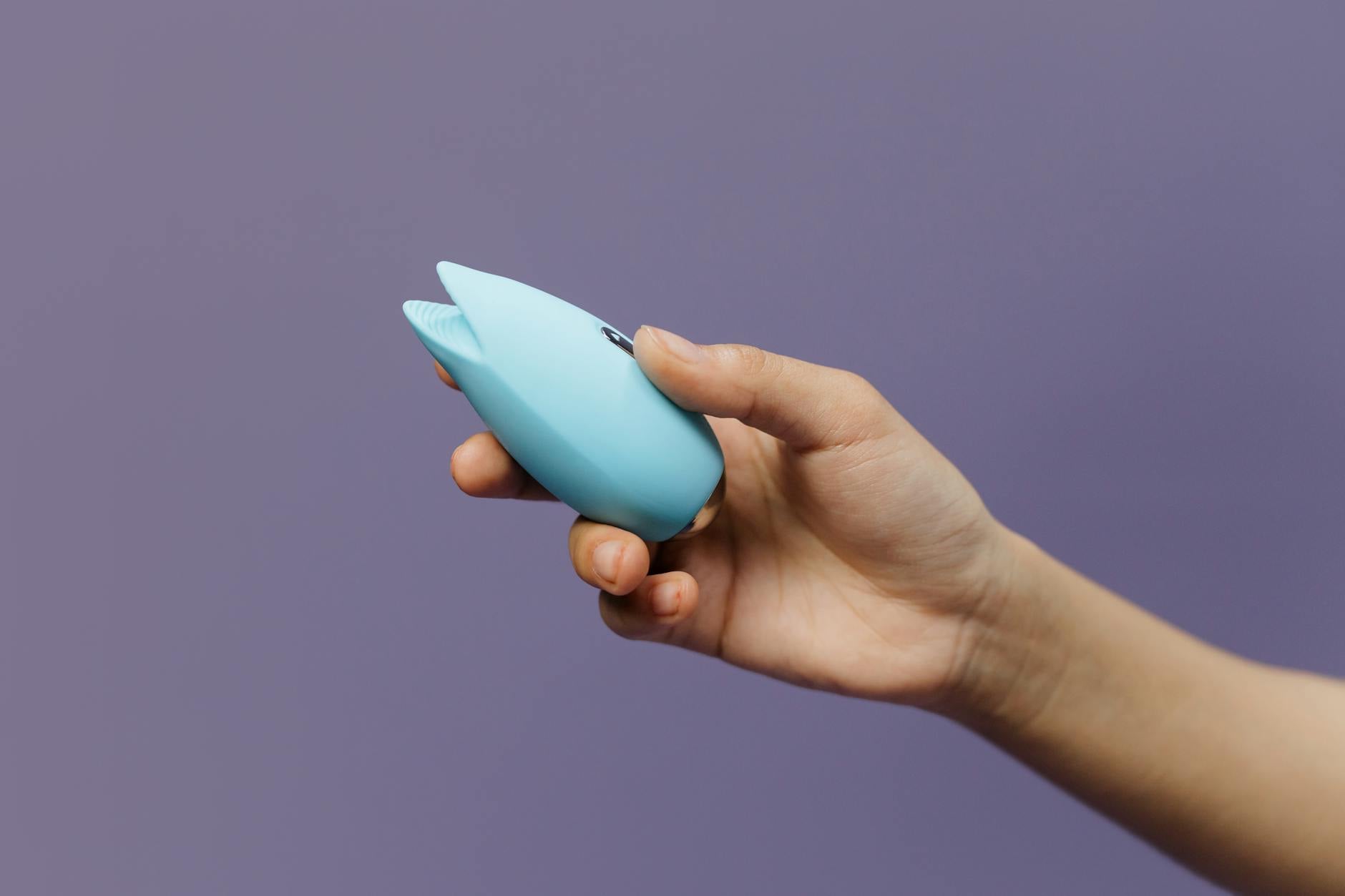
A lemon clitoral vibrator uses air-pulsing technology instead of direct vibration. Here's what that means for your changing body.
Traditional vibrators buzz at a fixed frequency—usually 80 to 5,000 Hz depending on the toy. Your clitoris has approximately 8,000 nerve endings, and during perimenopause, the density and sensitivity of those nerves shift. Some days you want broad, gentle pressure. Other days you want focused intensity. A vibrator can't change frequency easily.
Air-suction lemon vibrators pulse rhythmically and can be layered with different intensity levels. You're not fighting friction; you're working with pressure waves. When tissue is thinner or more sensitive, this distinction matters. The sensation is also harder to numb—your nerves don't habituate to air pressure the way they do to continuous vibration.
Plus, suction creates sensation across the whole clitoral network, not just the external glans. Many people in perimenopause report that this whole-system stimulation produces different (often more intense) orgasms than vibration alone.
The first adjustment: warm-up time
Your baseline arousal time extends during perimenopause. This is not a problem; it's just different.
Before, maybe 10 minutes of foreplay plus 5 minutes of direct stimulation worked. Now you might need 15 to 20 minutes of warm-up plus 10 to 15 minutes with the toy. That sounds like a lot when you list it, but it's really just a shift in pacing. Most people actually find the longer warm-up more pleasurable once they stop fighting it.
Start with the lemon clitoral vibrator at pattern 1 or 2, never jumping to the highest setting. Let your body tune into the sensation. You'll often find that what felt boring at first becomes deeply satisfying when you give your nervous system time to register it.
The second adjustment: lube becomes non-negotiable
I know you've heard this before. I'm saying it again because it matters more now.
During perimenopause, natural lubrication becomes less reliable—sometimes abundant, sometimes nearly absent, sometimes inconsistent during a single session. Water-based lubricant isn't just comfortable; it's the difference between pleasure and discomfort with air-suction vibrators. Silicone-based lubes feel richer and last longer, but they can degrade silicone toys, so stick with water-based.
Apply lube before you start. Reapply halfway through. Make it part of the ritual, not an afterthought. Your clitoris deserves the same care you'd give any sensitive area.
The third adjustment: pattern matters more than speed
When vibration is your only option, you're stuck with variations of "buzzing faster" or "buzzing slower." Air-suction lemon vibrators usually offer distinct patterns—waves, pulses, escalation, steady rhythm.
During perimenopause, the pattern you prefer might change from week to week, or even session to session. One week you want steady pressure. The next week escalating intensity works better. This flexibility is the real advantage of a lemon clitoral vibrator over a simple vibrator. Explore the patterns without shame. Your pleasure isn't fickle; your nervous system is responsively adjusting to hormonal reality.
What actually stays the same
Your orgasmic capacity doesn't disappear. The neural pathways that produce pleasure don't vanish. Your clitoris doesn't lose sensation; it redistributes it.
Many people report that orgasms during and after perimenopause feel different—sometimes more focused, sometimes full-body, sometimes requiring longer plateaus. Different isn't worse. It's often richer, actually, because you're working with more of your nervous system instead of chasing a single intense peak.
When to get hormonal support
If warm-up time extends beyond 30 minutes, or if discomfort appears during or after using your lemon vibrator, that's worth mentioning to a doctor. Genitourinary syndrome of perimenopause (GSPM) is real, and topical estrogen creams can help. These creams have minimal systemic absorption and work quickly. A few weeks of treatment can completely restore comfortable sensation.
Likewise, if desire has tanked entirely, mention it. Testosterone levels drop during perimenopause, and testosterone is a major driver of sexual interest in all bodies. Therapy isn't always necessary—sometimes a conversation and a treatment option is enough.
The permission you actually need
Here's what I wish someone had told me during my own perimenopause: your body isn't betraying you. It's asking you to pay attention differently. That lemon clitoral vibrator that used to feel amazing might feel different now, and that's not a failure of the toy or your body. It's just a change. And changes, properly understood, are often where the best discoveries happen.
You deserve pleasure that fits your body right now, not your body five years ago. That might mean adjusting timing, using a different toy, trying a new pattern, or getting support from a healthcare provider. All of those are fine. None of them mean you're broken.
Frequently Asked Questions
Why does my lemon clitoral vibrator feel less intense than it used to?
During perimenopause, estrogen drops, which reduces blood flow to the clitoris and makes the tissue covering it thinner. This changes how quickly you experience sensation and how intense it feels at any given setting. You're not less capable of pleasure—your body just needs different stimulation approaches. Air-suction lemon vibrators often feel more effective than traditional vibration during this transition because they work with pressure rather than against delicate tissue.
Can I use a regular vibrator during perimenopause, or should I switch to air-suction?
You can use whatever works for you. Some people find traditional vibrators still work great. Others find that the sensation becomes numb or that friction feels uncomfortable. Air-suction lemon clitoral vibrators offer an alternative that many people find more responsive during hormonal shifts. Try different patterns and intensities before assuming you need to switch. Your preference might just need adjusting.
How long should warm-up take during perimenopause?
There's no universal timeline. Some people need 10 extra minutes; others need 30. The key is stopping the clock-watching and letting your body lead. Most healthcare providers suggest 15 to 20 minutes of general foreplay plus time with the toy itself. If it takes longer than that, it's usually not a medical issue—it's just the new normal. Some people find the longer warm-up more satisfying anyway.
Does lubricant actually help with lemon clitoral vibrators?
Completely. Water-based lubricant reduces friction, increases glide, and prevents irritation on thinner perimenopause tissue. It also helps air-suction vibrators maintain consistent contact and sensation. Apply before you start and reapply as needed. This isn't optional—it's part of working with your body as it is now.
Should I see a doctor if pleasure feels different during perimenopause?
If warm-up time extends beyond 30 minutes, if there's pain, or if lubrication is missing entirely, a healthcare provider can help. Genitourinary syndrome of perimenopause is treatable with topical creams. If desire has vanished, mention it too. Sometimes the solution is simple: information, permission, and patience. Sometimes it's a low-dose treatment. Either way, you deserve support.
Can air-suction vibrators help with perimenopause numbness?
Yes, often. Because air-suction lemon vibrators stimulate the entire clitoral network rather than just surface vibration, they bypass the numbness that some people experience with traditional vibrators. The sensation is harder for your nerves to habituate to, meaning the pleasure stays consistent through longer sessions. You might discover that a lemon clitoral vibrator works better than what you used before.
The bottom line
Your body changes during perimenopause. Your pleasure doesn't disappear—it just requires different attention. Whether that's longer warm-up, more lube, a new pattern, or a different tool, all of it is fine. You're not broken. You're just in a new chapter of understanding your own desire.
If you want to explore how air-suction technology works with your changing body, tools like Hello Nancy's lemon clitoral vibrators are designed exactly for this. And if something feels off, a conversation with your doctor takes 10 minutes and often changes everything.
You deserve pleasure that fits you exactly as you are right now.