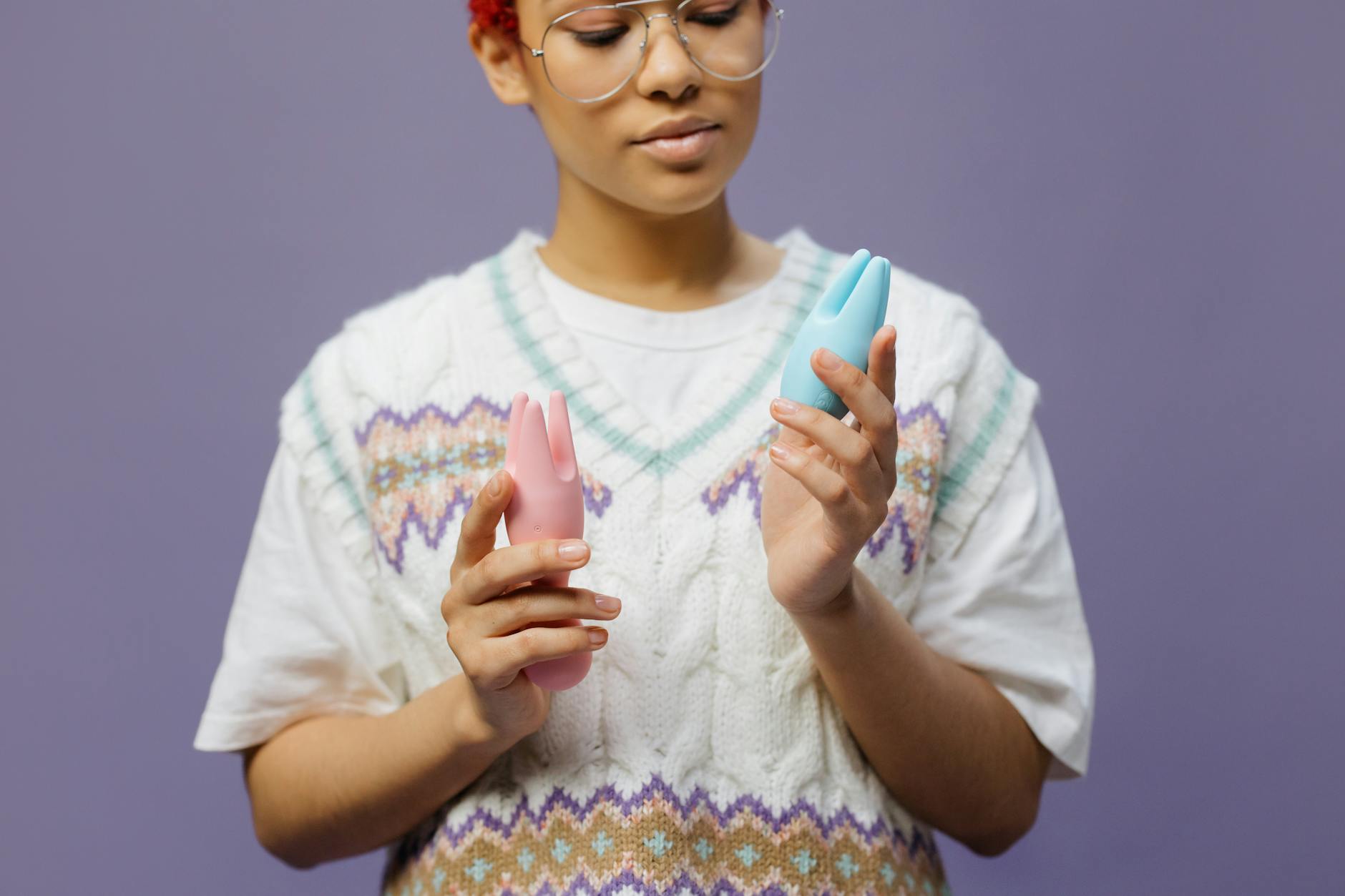
Let's start with the obvious part
You've been using buzz for years. Then someone hands you a Lem or another suction-based clitoral vibrator, and your first thought is: "This feels... soft?" That's not a broken toy or a broken body. That's your nervous system noticing something genuinely different.
Traditional vibrators use rapid back-and-forth oscillation (typically 3000-10000 Hz for commercial toys). Suction-based devices like the Lem work through a completely different mechanism. They create a gentle vacuum that rhythmically pulls at the clitoral tissue, stimulating the nerves without the direct percussion of vibration. The sensation is quieter, more localized, and in most cases, less immediately intense.
Here's the thing nobody explains: that's not worse. It's different. And your body might need a few sessions to remember how to respond to it.
How vibration has trained your nervous system
Your body adapts to whatever you use most. If you've spent years with traditional vibrators, your nerve endings have become exquisitely attuned to that specific frequency and rhythm. Your brain has built a neural pathway for orgasm that goes through vibration.
This is called sensory adaptation. It's the same reason a piece of music you loved at 20 feels less thrilling at 30 if you hear it constantly. Your nervous system becomes efficient at processing familiar stimuli. The vibration still works, but it doesn't surprise you anymore.
When you switch to suction-based stimulation, you're essentially asking your body to learn a new language. The clitoral nerves are still there. The capacity for pleasure hasn't gone anywhere. But the pathway to get there is unfamiliar, which means it might feel less intense initially.
Why suction feels softer at first
Three neurological reasons:
1. Suction is distributed, not targeted. Vibration concentrates stimulation in a small area with high intensity. Suction spreads the sensation across a wider tissue surface. Wider spread equals less pressure per square millimeter. Your brain reads this as "gentler" because it literally is less forceful, even though the overall nerve stimulation might be deeper.
2. Suction activates different nerve fibers. Your clitoris has two main types of nerve endings: those that respond to vibration (rapid, high-frequency) and those that respond to pressure and sustained stimulation (deeper, slower). Traditional vibrators primarily fire the fast-twitch nerves. Suction engages the slow-twitch fibers more heavily. Slow-twitch stimulation builds pleasure more gradually and subtly. It can feel like nothing is happening until suddenly it's happening intensely.
3. You're not experiencing habituation to this sensation yet. Your nervous system hasn't had time to "expect" suction. That unfamiliarity reads as less intensity even when the absolute nerve firing rate might be similar or higher.
The recalibration window
Most people need 4-8 sessions with a new stimulation type before their nervous system fully recalibrates. This isn't a hard deadline. It's an average. Some people feel the difference in one session. Others take longer, especially if they've been using traditional vibrators exclusively for years.
During this window, here's what actually helps:
Warm up with what you know. If you normally start with a traditional vibrator, keep doing that for the first minute or two. Let your body hit a baseline level of arousal and blood flow. Then switch to the Lem. This isn't cheating. It's meeting your body where it is.
Lower your expectations temporarily. I know that sounds counterintuitive, but it matters. If you go into your first session with a lemon vibrator expecting the same intensity as a toy that's trained your body for five years, you'll interpret the different sensation as "not working." Different is not the same as worse. Set your expectation at "interesting" or "exploratory," not "better orgasm."
Give it time to build. Suction-based devices often require longer warm-up. Budget 15-25 minutes instead of 5-10. Most people find that the sensation deepens significantly in the latter half of a session as blood flow and arousal increase.
What changes after recalibration
Here's why people eventually prefer lemon vibrators or other suction devices: after your nervous system adapts, the sensation becomes richer and more textured than vibration alone.
Because suction engages both fast-twitch and slow-twitch nerve fibers, most people report a fuller range of sensation. Orgasms that arrive through suction-based stimulation often feel more diffuse and sustained rather than sharp and fleeting. The buildup is slower, but the intensity at the peak is often higher. And critically, the plateau between orgasms is usually shorter because your nervous system isn't as fatigued from the repeated high-frequency firing of traditional vibration.
That's not universal. Some people genuinely prefer vibration. But the most common experience I see is that people cycle between tools depending on mood and availability. Suction for leisurely, textured pleasure. Vibration for quick, intense release. Different tools, different experiences, both valuable.
Managing the transition if you're already sensitive
If you have a highly responsive clitoris or you're prone to overstimulation, the initial gentleness of suction might actually feel like a relief. Your transition might be quick and positive. But some people find suction feels almost too subtle at first, which can trigger frustration or anxiety.
If that's your experience, try these adjustments:
Use a pattern instead of steady suction. Most lemon clitoral vibrators have multiple pulse patterns. Steady suction can feel understimulating at first. A pulsing or wave pattern often feels more immediately noticeable while you're recalibrating.
Start on a lower setting and work up slowly. Many people rush to the highest setting on a new toy because they're used to the intensity of their old one. Resist that. Start at level 1 or 2 and spend a few minutes there. Gradually increase as arousal builds. Your body will tell you when more feels right.
Focus on your breathing. Sounds woo, but it matters neurologically. Shallow breathing restricts blood flow to the genitals. When you switch to a less intense stimulation method, optimal breathing becomes more noticeable. Breathe deeply and rhythmically. This sounds simple, but it genuinely affects how quickly your body responds to suction.
The long-term picture
After about a month of regular use, most people stop comparing suction-based devices to traditional vibrators. The devices aren't competing anymore. They're just different tools that your body now knows how to respond to.
Many couples also find that after both partners have tried lemon vibrators, they have more shared vocabulary around pleasure. Suction feels different, yes, but it's also generally quieter and often less intimidating for partners who are new to toys. If you're thinking about bringing this into partnered play, that difference matters.
The transition from traditional vibration to suction-based stimulation is real and valid. It's not a flaw in the toy or your body. It's your nervous system doing exactly what it's supposed to do: adapting to new input. Give it time, stay curious, and don't force intensity that isn't there yet. The pleasure usually follows.
People also ask
How long does it take to get used to a suction vibrator after using traditional vibrators?
Most people notice a meaningful difference in sensation within 4-8 sessions. Your nervous system adapts relatively quickly to new stimulation patterns, but this timeline varies based on how long you've been using traditional vibrators and how frequently you're exploring the new device. Consistent use helps. If you try a lemon vibrator once every two weeks, the timeline stretches. If you use it several times a week, recalibration happens faster.
Will my sensitivity come back if I switch back to traditional vibrators?
Yes. Sensory adaptation is reversible. If you've been using suction-based devices exclusively for a while and return to traditional vibration, you might find the sensation feels intense again at first. Your nervous system will recalibrate back to whatever you're using regularly. This is actually useful information. It means you're not "broken" in either direction. Your body is responsive and adaptive.
Can I use both types of vibrators in the same session?
Absolutely. Many people do. Starting with traditional vibration for quick arousal, then switching to suction-based devices for the main event, is a common approach. Or vice versa. Alternating between different types of stimulation can prevent habituation and keep sensation fresh. Just give yourself a few minutes between switches to let your nervous system reset.
Why does my lemon vibrator feel more intense on some days than others?
Arousal level, blood flow, stress, and your cycle all affect how intensely you perceive stimulation. On high-arousal days, suction-based devices feel noticeably stronger. On lower-arousal days, they might feel gentler. This is normal and not a sign that the device is faulty. If intensity feels dramatically different across multiple sessions, check your battery level and make sure you're giving yourself adequate warm-up time.
Should I be worried if I don't feel intensity immediately with a lemon vibrator?
No. That's the recalibration window talking. Your body hasn't learned this language yet. If intensity doesn't arrive even after consistent use over several weeks, try the warm-up strategies mentioned above: longer sessions, pulsing patterns instead of steady suction, and intentional breathing. If nothing shifts after a month, your body might simply prefer traditional vibration, which is fine. Different people have different preferences.
Is the Lem different from other suction-based clitoral vibrators?
The Lem uses specific suction technology that creates a different sensation than some other lemon-shaped toys or other suction-based devices. That said, the basic principles are the same: you're switching from vibration to suction, and recalibration is part of the process. If you try one suction-based device and it feels underwhelming, give your nervous system time before assuming all lemon vibrators will feel the same.
What comes after recalibration
The transition from traditional vibrators to suction-based stimulation can feel anticlimactic initially. That's not a referendum on the lemon vibrators or your body. It's your nervous system recognizing something new and needing time to build new pathways to pleasure.
If you've been using traditional vibrators for years, that recalibration period is worth sitting with. It's also worth considering what draws you to try something different in the first place. Are you chasing novelty? Exploring sensations that feel less intense? Experimenting with your partner? Your reason shapes how you approach the transition.
Give yourself permission to take this slowly. Your pleasure isn't a race. And if you ever want to explore deeper questions about what you're looking for from toys or stimulation, we're here to talk through it. Reach out anytime at our contact page.