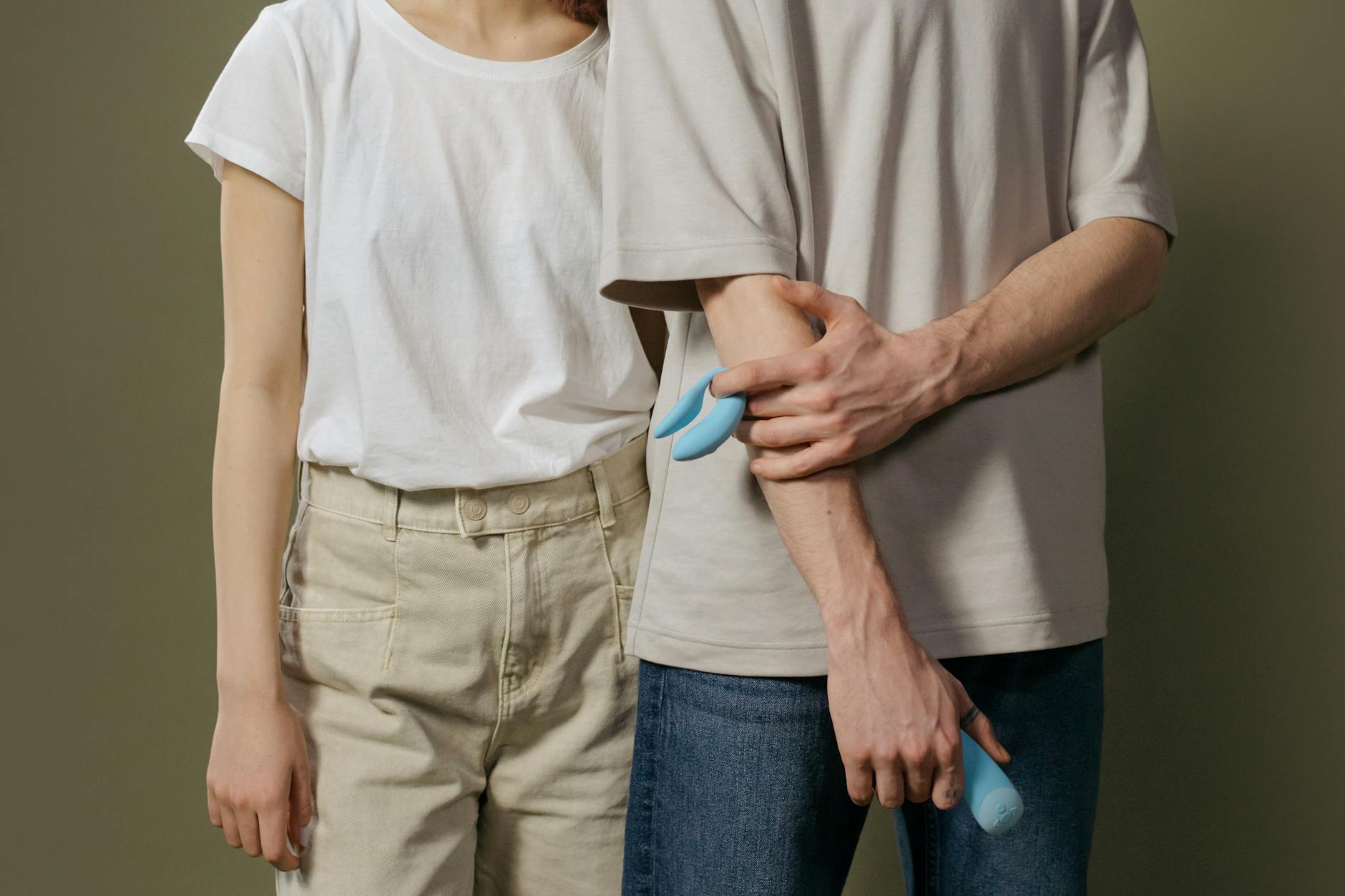
Let's talk about why friction isn't your friend
If you've ever used a vibrator and felt raw, tender, or irritated afterward, you weren't doing anything wrong. Your skin just isn't built for hours of high-frequency contact against silicone. Most vibrators on the market use rotational or linear vibration, which means the toy is literally moving back and forth against your skin at sometimes 5,000+ oscillations per second. That's friction, at scale.
Lemon vibrators work completely differently. Instead of movement, they use air-pulse suction technology. No contact means no irritation, no microabrasions, and no reason to skip a day after a great session.
How air-pulse technology actually protects your tissue
Here's the mechanical difference: Traditional vibrators stimulate through repetitive friction and pressure. Air-pulse toys like the Lem vibrator create rhythmic suction waves that pull gently on the clitoris without any sliding motion. Think of it like the difference between rubbing sandpaper on your arm versus a gentle pumping motion.
Your clitoris has about 8,000 nerve endings packed into a tiny area. Those nerves respond incredibly well to suction and rhythm, but they're sensitive to sustained friction. When you use a regular vibrator for 20 minutes straight, even on a low setting, you're creating micro-inflammation. The tissue gets red, slightly swollen, and more sensitive to touch. Use the same lemon clitoral vibrator for an hour? Your skin feels the same afterward.
This matters because irritation is cumulative. One session with friction you might not notice. But after five sessions a week, your tissue starts to protest. It becomes tender to touch, orgasms get harder to reach, and you end up taking breaks from pleasure because your body needs to recover.
With air-pulse technology, there's nothing to recover from.
The science behind suction and nerve stimulation
The clitoris has a unique anatomy that most people don't understand. The visible part is just the glans. The actual clitoral body extends internally in a wishbone shape, with sensitive tissue running deep. When you apply suction, you're creating a pressure differential that stimulates the entire structure, not just the surface.
Medical research on air-pulse devices shows they activate more nerve pathways than vibration alone. A 2018 study in the Journal of Sexual Medicine found that users of suction-based toys reported stronger orgasms and better tolerance for repeated use compared to traditional vibrators. The reason is biological: you're not fighting friction or pressure fatigue. You're working with the natural responsiveness of your tissue.
Sensitive skin specifically benefits because there's no abrasion at all. People with conditions like eczema, contact dermatitis, or just naturally reactive skin often find that regular vibrators trigger flare-ups. Lemon vibrators don't. The suction action is gentle enough for daily use without causing any inflammatory response.
Who actually needs this (it's not just one person)
Let's be specific about when air-pulse makes the biggest difference.
If you have vulvodynia, a chronic pain condition affecting the vulva, traditional vibrators often make things worse. The stimulation can feel sharp or burning instead of pleasurable. Air-pulse is usually gentler and less likely to trigger pain responses.
If you're using vibrators frequently, like daily or multiple times daily, friction adds up fast. Your tissue becomes sensitized, orgasms feel less intense, and you might experience temporary numbness. Switching to a lemon clitoral vibrator solves this because there's no cumulative irritation.
If you have sensitive skin anywhere on your body, chances are your genital tissue is equally sensitive. A lemon vibrator won't trigger the same reaction.
If you're recovering from childbirth or medical procedures, air-pulse is often what doctors recommend over traditional vibrators specifically because it doesn't create friction or pressure trauma.
You don't need all these conditions to benefit. Even if you just prefer comfort and want a toy that won't leave you sore, air-pulse is the better choice.
The difference between lem vibrators and suction-only toys
Not all air-pulse devices are created equal. Some use pure suction with no movement. Others, like lemon vibrators, combine gentle suction with rhythmic patterns that create variation. The Lem vibrator, for example, has multiple intensity levels and wave patterns that keep stimulation fresh without ramping up friction.
This hybrid approach is actually ideal for sensitive skin because it prevents habituation. Your nerve endings don't stop responding the same way they would to monotonous friction. You can use the same toy and feel different sensations depending on which pattern you choose.
When you're evaluating other clitoral vibrators against lemon options, check whether the product uses suction or vibration. If the marketing mentions "air-pulse," "suction," or "gentle stimulation," you're likely getting a product designed for sensitive tissue. If it emphasizes "powerful vibrations" or "high-frequency buzz," it's a traditional vibrator and will carry the same friction risks.
What to expect when you switch from friction to suction
The first time you use an air-pulse lemon clitoral vibrator, you might feel like it's not doing anything. Suction is a completely different sensation than vibration. It's more localized, quieter, and the stimulation builds differently. Give it five to ten minutes before judging. Let the rhythm do its work.
Most people report that once they adjust to the sensation, they never go back. Orgasms tend to feel more intense because you're not fighting friction or pressure numb-out. Sessions can be longer without discomfort. And your tissue stays happy.
You might also notice that you're less sore the next day. That sore, tender feeling that could linger for hours or even a day after using a regular vibrator? Mostly gone. Because there's no friction, there's nothing to be sore about.
Pairing air-pulse with good habits for sensitive skin
Technology alone isn't the whole story. If you have genuinely sensitive skin, a few other practices help.
Use water-based lube. Even with air-pulse suction, a bit of lubrication helps the seal and makes the sensation smoother. Silicone lube can damage silicone toys, so stick to water-based.
Start low and work up. Don't jump straight to the highest intensity. Your tissue adapts better when you build gradually.
Take breaks between sessions if you're using the toy frequently. Even though air-pulse doesn't cause friction damage, your nervous system benefits from recovery time. An hour on, a few hours off is plenty.
Clean your toy after every use with warm water and a gentle soap designed for toys. Leftover lubricant or moisture can harbor bacteria, which irritates sensitive tissue.
If you're prone to yeast infections, watch for any change in discharge or odor after using a new toy. This isn't common with air-pulse devices, but sensitivities vary. If something feels off, switch to a different toy and see if it resolves.
The long game: why this matters for your pleasure
Pleasure compounds over time. The more comfortable you are, the more you use a toy. The more you use it, the better you understand what works for your body. The better you understand your body, the more intense and satisfying your orgasms become.
Friction-based vibrators interrupt this progression because they introduce discomfort. You use them, feel great for 30 minutes, then feel sore. You take a few days off to recover. By the time your tissue has healed, you've lost momentum. You start over.
With a lemon vibrator, there's no cycle of use and recovery. You can develop a consistent relationship with your pleasure. That consistency is actually where the deepest satisfaction lives.
Common questions about air-pulse and sensitive skin
Can I use an air-pulse toy if I've never had one before?
Yes. It's actually a great entry point because you're less likely to experience irritation or discomfort. If you have sensitive skin, air-pulse is honestly the better first choice than a traditional vibrator.
Will a lemon vibrator feel less intense than a regular vibrator?
Different, not less. Most people report that air-pulse feels more localized and intense once they adjust to the sensation. You're not comparing apples to apples because the stimulation is fundamentally different.
How often can I safely use a lemon clitoral vibrator?
Daily, if you want. There's no friction-based damage, so your tissue doesn't need recovery time the way it would with a traditional vibrator. Some people use air-pulse toys multiple times daily without any irritation.
Do all lemon vibrators use the same technology?
The Lem vibrator is the most common lemon clitoral vibrator, and yes, it uses air-pulse suction. That said, not all air-pulse toys are labeled as lemon vibrators. Check the product description to confirm you're getting true suction-based technology.
What if I have sensitivities and an air-pulse toy still bothers me?
It's rare, but some people find suction irritating for reasons unrelated to friction. If an air-pulse toy doesn't work, you might benefit from talking to a healthcare provider about what's actually happening. Sometimes irritation points to something that needs medical attention.
Can I combine air-pulse with a partner during sex?
Absolutely. Air-pulse toys are quieter and less intrusive than traditional vibrators, so they integrate really easily into partnered play. Many couples actually prefer them for that reason.
The bottom line
If you have sensitive skin or you're tired of the friction cycle that comes with traditional vibrators, a lemon vibrator isn't a luxury upgrade. It's a practical switch to technology designed for comfort and sustainability. You deserve pleasure that doesn't come with a recovery period. Air-pulse technology gives you exactly that.
Ready to explore what works for your body? Start with a low-intensity setting and give yourself permission to figure out what feels good. Your tissue will thank you.