Let's name what's actually happening
You've been away from your own pleasure for a while. Whether it's been three months or three years, whether it was depression, grief, a bad relationship, exhaustion, or just the slow erosion of a long marriage, you're not broken. You're cautious. And that caution is smart.
Coming back to pleasure after a dry spell isn't about jumping into high intensity. It's about rebuilding trust with your own body, which has every reason to feel guarded.
Why your body is hesitant (and that's normal)
When you haven't accessed your pleasure in a long time, a few things happen. Your nervous system gets used to a baseline of shutdown. Your pelvic floor muscles can tighten from disuse or tension. Mentally, you might feel disconnected from sensations that used to feel automatic. And honestly? There's shame baked into the pause itself.
That shame whispers: "You're too old now." Or "You waited too long." Or "You won't remember how." All of this is your brain trying to protect you from disappointment. Which is fair. But it's also not true.
Your capacity for pleasure doesn't expire. It gets dormant.
Start where nobody tells you to start
Nobody advises this because it sounds obvious and therefore skippable. But the actual first step is permission. Not from a partner. From yourself.
Tell yourself: "My pleasure matters. Taking time to rebuild this is not frivolous. I deserve this."
Write it down if it helps. Read it when the resistance shows up.
Then, schedule it. Literally. Put it on your calendar. Sunday afternoon, Tuesday night, whenever. Twenty minutes. No outcome required. This removes the pressure of spontaneity, which is a mercy when you're starting over.
The right environment removes half the friction
You're rebuilding trust with your body. Your environment should reflect that.
Clear the space. Lock the door. Silence your phone. Light a candle if that feels good, or don't. The point is: you're creating a contained space where pleasure is the only job.
Temperature matters more than people admit. You want to be warm. Cold bodies don't relax. Layer yourself in blankets, take a warm shower first, whatever gets you to a state of physical comfort.
And honestly? A shower or bath before is not frivolous either. It's part of the ritual of returning to yourself.
Why a lemon vibrator is the right re-entry tool
Here's where I need to be direct: a traditional vibrator can feel harsh when you're reconnecting. The mechanical buzz can be jarring on tissue that's tense or dry. You might assume it feels bad and conclude that you're not a vibrator person.
You might be a lemon sucker person instead.
A lemon vibrator uses pulsing suction rather than vibration. That suction stimulates the thousands of nerve endings in your clitoris without the same intensity as buzz. It feels like a gentle pulse. It's generous with rhythm but not demanding about speed.
For someone rebuilding confidence, that's the difference between being pushed and being invited.
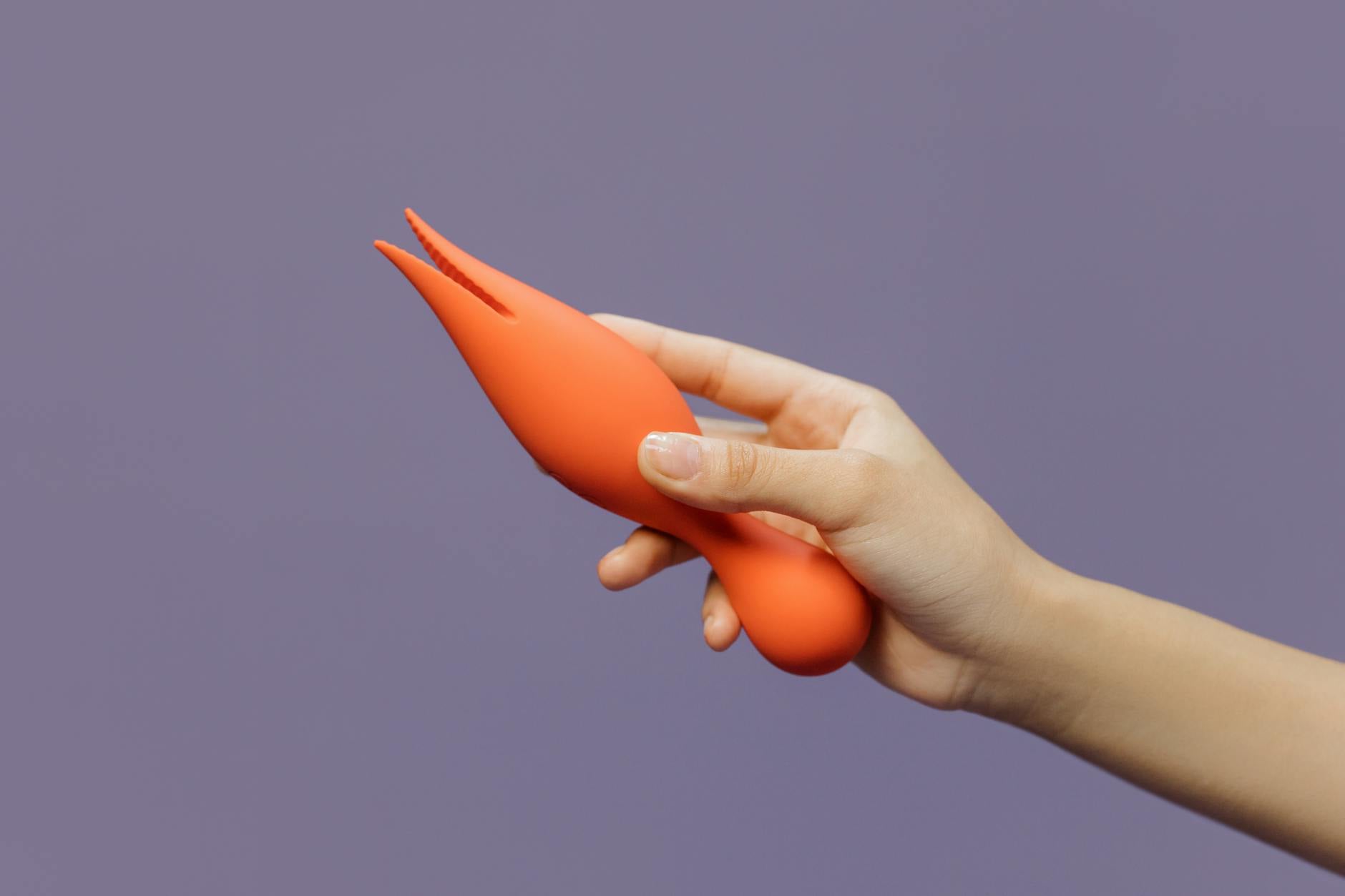
Photo by cottonbro studio on Pexels
Start on the lowest setting. You're not trying to orgasm. You're trying to reconnect with sensation. The goal is "this feels interesting" not "this gets me there."
The timeline nobody talks about
Don't expect reconnection in one session. Some people feel arousal return after two or three solo sessions. Others take weeks. Both are completely normal.
Your nervous system is learning that pleasure is safe again. That takes time.
If nothing happens in the first week, that's not failure. It's your body asking for more patience. Keep showing up. Keep creating the container. The pleasure will return when your system believes it's genuinely safe.
The mental work (it's bigger than you think)
While your body is reconnecting, your mind is processing a whole separate thing. If the dry spell came from a relationship ending, your brain might feel disloyal. If it came from depression, you might feel shame about the time lost. If it came from caregiving or exhaustion, you might feel guilty for taking time for yourself.
This is where having someone to talk to helps. A therapist, a trusted friend, or a coach who specializes in this transition. Not because you're broken, but because shame gets smaller when it's spoken out loud.
If you had a partner during the dry spell, and you're now with someone new, that's a different process entirely. Your body might need to learn new touch, new rhythm, new safety cues. That deserves conversation and patience. How to introduce a lemon vibrator to your partner without awkwardness covers that terrain.
What happens when sensation starts returning
Often, the first thing people notice is not orgasm. It's relief. A kind of physical sigh that says "oh, my body still does this."
Then comes curiosity. You might start exploring what speed feels best, or what rhythm your nervous system actually prefers now (it might be different than before). You might discover that your pleasure landscape has shifted. That's not loss. That's evolution.
Some people report that their orgasms after a long pause feel different. Sometimes stronger. Sometimes more focused. Sometimes longer. There's no "correct" experience here. There's just your experience.
The clitoris has roughly 8,000 nerve endings. A quality lemon vibrator engages them in a way that's responsive, not aggressive. You're not fighting your way back to pleasure. You're inviting it back.
If something feels wrong, pause
Pain, burning, or intense discomfort is not part of healthy reconnection. Neither is numbness that doesn't fade after a few sessions.
Those are signals to slow down or talk to a healthcare provider. Hormonal changes, pelvic floor tension, or tissue changes can all affect sensation. None of them are permanent, but they might need attention beyond self-care.
The partner conversation (if applicable)
If you're rebuilding pleasure in the context of a long-term partnership, your partner needs to understand this is about you, not them. A low libido or a dry spell doesn't mean you're not attracted. It means your nervous system needed to recalibrate.
The work you're doing alone is actually the most generous thing you can do for the relationship. You're rebuilding your own capacity before asking someone else to meet you in it.
When you're ready to include a partner, that's a separate conversation. For now, this time is yours.
Patience is the actual skill here
We're all trained to expect intensity, progress, measurable results. Returning to pleasure works differently. It rewards gentleness, consistency, and deep patience with yourself.
Show up for twenty minutes. Use a tool that feels inviting, not intimidating. Create a space that says "you matter." Then trust that your body remembers what it knows.
Pleasure doesn't leave permanently. It pauses. And when you're ready, it returns.
People also ask
How long does it usually take to feel pleasure again after a dry spell?
There's no universal timeline. Some people feel reconnected after a few sessions over two weeks. Others take two or three months. Your nervous system is learning that pleasure is safe again, and that learning happens on its own schedule. Consistency matters more than speed. Show up regularly, even if nothing happens, and trust the process.
Is it normal to feel guilt when reconnecting with pleasure?
Completely. If the dry spell came after a breakup, you might feel disloyal to a past partner. If it came from depression or caregiving, you might feel guilty for prioritizing yourself. That guilt is usually a sign of internalized shame, not actual wrongdoing. Pleasure is a basic part of self-care, not a luxury or betrayal. Talking through that guilt with someone you trust makes it smaller.
Why does a lemon vibrator feel better than a regular vibrator for reconnection?
A lemon clitoral vibrator uses pulsing suction instead of vibration. That suction is gentler on tissue and feels more like an invitation than a demand. For someone whose nervous system is in protection mode, that difference is significant. Traditional vibrators can feel jarring or overwhelming when you're just starting to trust sensation again.
What if I still feel nothing after several weeks?
First, make sure you're creating genuinely safe conditions. That means no distractions, no pressure to perform, no outcome attached. If you've been consistent and patient and sensation still isn't returning, that's worth mentioning to a healthcare provider. Hormonal shifts, pelvic floor tension, or underlying health changes can all suppress sensation temporarily. None of them are permanent, but they might need specific attention.
Should I tell my partner I'm reconnecting with solo pleasure?
That depends on your relationship and your comfort. If you live together and have space and privacy, you probably don't need to announce it. If you share a bedroom or have less privacy, you might choose to say something like "I'm taking some time to focus on my own pleasure and self-care." You don't owe details. You do owe honesty if asked directly. Most secure partners understand that solo pleasure is separate from partnership and actually strengthens the relationship.
Can I use a lemon vibrator with a partner once I'm reconnected?
Absolutely. Many people find that reconnecting solo first makes partnered pleasure easier because you already know what works for your body. When you eventually introduce a partner, you can guide them toward what you've learned. That knowledge is powerful. It means you're not fumbling in the dark together.
Your pleasure matters. The time you take to rebuild it isn't lost time. It's the foundation for everything that comes after.