Let's start with the honest part
Introducing a lemon vibrator (or any vibrator) to your partner doesn't have to feel like you're confessing something. But I know it does. Most people approach this conversation like they're about to say something's broken, something's missing, or worse, that their partner isn't enough. None of that is true, and none of that needs to be the subtext.
The real issue isn't the vibrator. It's the gap between what you want to say and what you're afraid they'll hear. Close that gap, and the conversation becomes easy.
Why the conversation feels so loaded
There's a cultural story most of us inherited that goes like this: if you want a vibrator, it means your partner isn't satisfying you. If your partner wants to introduce one, it means you're not satisfying them. Both of these are nonsense, but they run deep.
Here's what's actually true. A clitoral vibrator like the Lem works differently than a hand or mouth. It's not better or worse, just physiologically distinct. Suction-based stimulation activates different nerve pathways than friction does. You can have a partner who's attentive and skilled and still find that a vibrator opens something new. That's not a criticism of your partner. That's just anatomy.
The other thing that's true: introducing a vibrator often means you're thinking about pleasure differently. You're being more intentional. You're asking for something specific. And for a lot of couples, that shift alone transforms the whole dynamic.
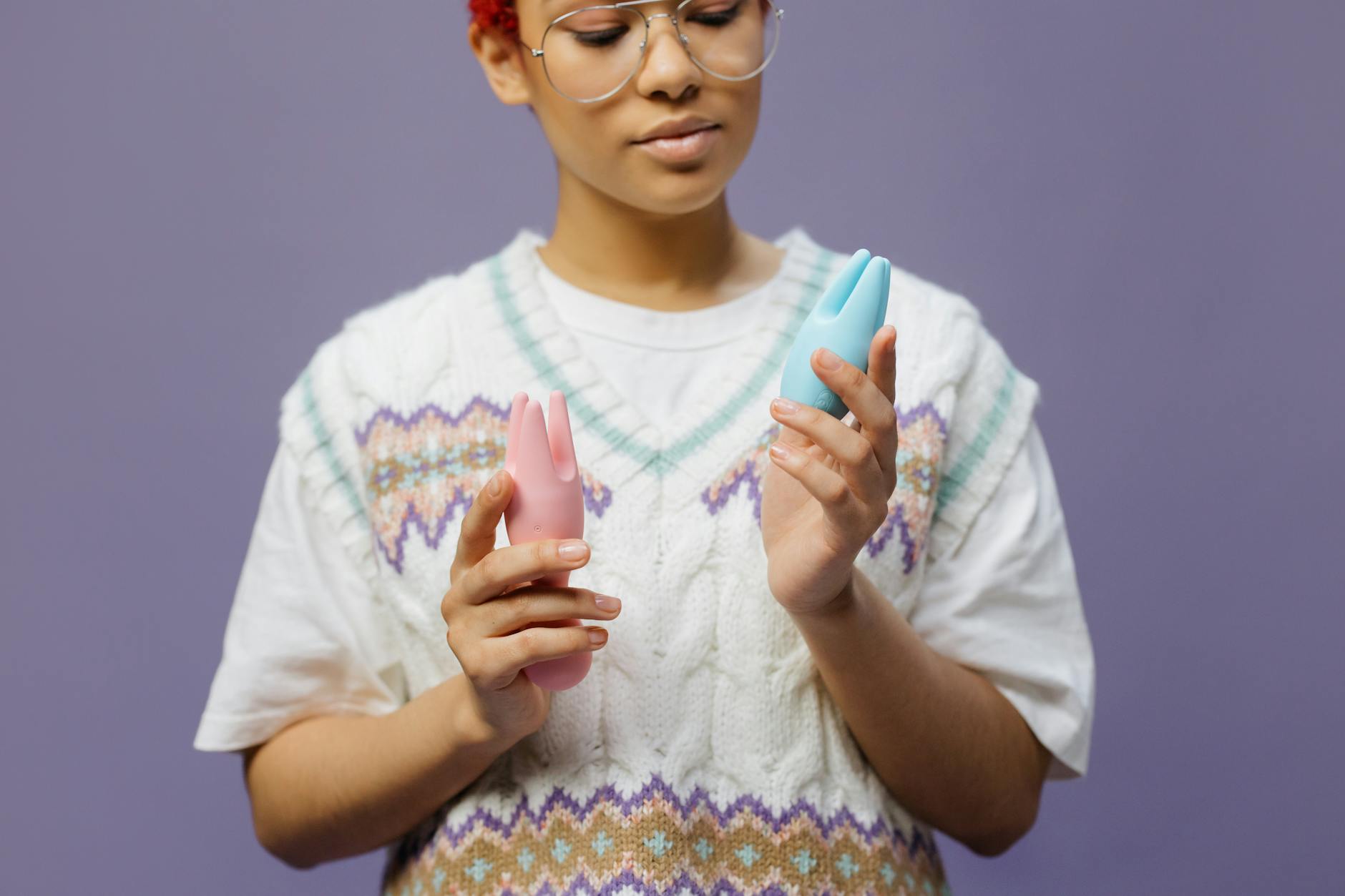
Photo by cottonbro studio on Pexels
Timing and framing matter more than words
Don't have this conversation during sex or immediately before. You want space, calm, and both of you clothed. That's not because vibrators are shameful. It's because you're talking about something vulnerable, and you need enough brain space to hear each other clearly.
Frame it as an exploration, not a fix. "I've been curious about this, and I'd like to try it together" lands differently than "I want this because X isn't working." The first is collaborative. The second is criticism, even if you don't mean it that way.
Timing also means picking a moment when your partner isn't already feeling insecure or disconnected. If you've been in a rough patch, this conversation can feel like it's adding weight to something already strained. If you're in a good place, it lands as "hey, I want more of what we have."
Three scripts that actually work
You don't need fancy words. You need honesty. Here's what works:
Option 1 (curious and collaborative): "I've been reading about this style of stimulation, and I'm curious what it would feel like. Would you want to try it together? I think it could be fun to explore something new as a couple."
Option 2 (specific and grounded): "My body responds really well to clitoral suction, and I found this vibrator that does that. I'd love if you'd be part of trying it with me, either using it on me or just being there."
Option 3 (direct and vulnerable): "There's something I want to try in our sex life, and I want to talk about it because you matter to me. It's a vibrator, and I think it could feel really good for both of us."
Pick the one that matches your actual voice. Authenticity matters more than perfect phrasing.
What to do if they get defensive
Some partners will hear "I want a vibrator" as "you're not enough." It happens. Here's how to navigate it:
Don't defend the vibrator. That's a trap. You'll end up arguing about whether vibrators are good, and you'll lose the actual conversation. Instead, address the fear underneath the defensiveness.
"I hear that you feel like this means something negative about us. That's not what this is. This is me wanting to explore my own pleasure with you, not instead of you. I want you there." That's the move. Acknowledge the feeling, clarify the intention, and invite them in.
Some partners will need time. That's okay. You're not asking for permission, but you are asking for partnership, and partnership sometimes requires patience. Give them a day or two, then come back to it. Often the second conversation is easier because the initial shock has worn off.
If your partner stays closed off after a genuine conversation, that's different. That points to something bigger about how you communicate around pleasure or bodies in general. That might be worth unpacking with a therapist, and that's not a failure. That's just what couples therapy is for.
How to actually use it together for the first time
Don't make it a big production. Pressure kills pleasure. You're just trying something new, not performing a script.
Start with the lower settings. The Lem and similar lemon clitoral vibrators have multiple intensity levels for a reason. Your body might be sensitive to the stimulation at first, or you might just want to ease into it. There's no prize for starting at maximum intensity.
If you're with a partner, let them handle it at first if that feels right. That keeps them involved and gives you the freedom to just receive and pay attention to what you're feeling. Some couples like to take turns. Some like to use it together. There's no correct way.
Talk a little during it. "That's nice," "a bit softer," "keep going." Nothing heavy. Just feedback that helps them understand what's working. This is partly about pleasure and partly about closeness. The talking is part of both.
Reframing the conversation for long-term couples
If you've been together for years, introducing a vibrator is often really about saying: "I still want to explore with you. I still think about this. You still matter to my pleasure." That's profound, actually. And it can shift something between you.
As couples age and bodies change, vibrators often become more relevant, not less. Someone in their 50s using a clitoral vibrator isn't doing something sad or desperate. They're staying engaged with their own pleasure. And if they're using it with their partner, they're staying connected too.
This is especially true if you've read about how lemon vibrators work well for sensitive skin or if you're navigating changes like perimenopause. A vibrator isn't a sign that something's ending. It's a tool for keeping something alive.
When to have the second conversation
After you've tried it, check in. Not in a clinical way. Just: "That was nice," or "I liked that," or "I want to try it again." Let your partner know this wasn't a one-time experiment. This is part of your sex life now, and you want them to be part of it.
If something didn't work, say so. Maybe the setting was too intense. Maybe you needed more warm-up time. Maybe you realized you want to use it solo sometimes instead. None of this requires a big conversation. Just small adjustments as you figure out what fits.
For couples looking for deeper strategies on navigating intimacy shifts, exploring best practices with partners using lemon vibrators can deepen your connection. Read more about how to approach this together in our guide on best lemon vibrators for women with partners.
The bigger picture
Introducing a vibrator is often the first time a lot of couples explicitly talk about what feels good and what doesn't. It's the first time pleasure becomes a thing you're designing together instead of something that just happens or doesn't.
That's the real gift. Not the vibrator itself, but the conversation it opens. Once you've had one honest talk about pleasure, the next one gets easier. And the one after that.
Your partner might surprise you. They might be relieved that you're bringing this up because they've been thinking about it too. They might have ideas you didn't expect. They might feel closer to you for trusting them with something vulnerable.
Start with the conversation. Everything else follows.
People also ask
How do I know if my partner will be offended by introducing a vibrator?
You don't, which is why the conversation matters. Most partners aren't actually offended. They're scared of what they think it means about them. That's why the framing is so important. If you come in with "I want to explore this with you" instead of "you're not satisfying me," most partners respond with curiosity instead of defensiveness. If your partner does respond negatively, that tells you something about your communication style as a couple. That's information. You can work with that.
Should I introduce the vibrator myself or suggest we buy one together?
Buying together is often smoother because it takes away the surprise element and gives your partner some agency in the choice. But if you already own one, that's fine too. Just lead with the conversation, not the object. "Hey, I bought this, and I want to try it with you" works fine if you frame it as excitement, not as something you've been hiding.
What if my partner wants to use the vibrator on themselves instead of with me?
That's actually great. It means they're comfortable with it and interested in their own pleasure. Encourage that. Solo exploration is healthy. If they never want to use it during partnered sex, that's a boundary, and you respect it. But often once someone gets comfortable with a vibrator on their own, they're more open to using it together.
Is it normal to use a lemon vibrator during sex with a partner regularly?
Completely normal. Lots of couples integrate vibrators into their regular sex life. Some use them every time. Some occasionally. Some use them for specific types of stimulation. If it feels good and you both enjoy it, that's all that matters. There's no quota or correct frequency.
How do I ask my partner to use the vibrator on me if they seem hesitant?
Give them time, but also be clear about what you want. "I'd really enjoy if you'd try using this on me" is different from leaving it up to them. You're allowed to ask for what you want. They're allowed to say no. But sometimes hesitation just means they need a little encouragement. Show them you trust them with it. Let them know what feels good when they try. Make it easy.
What if we try it and it doesn't feel good?
Then you stop. Not every tool works for every body, and that's okay. Maybe a different style of vibrator would feel better. Maybe you're just not a vibrator person, and that's fine too. The point was to explore together, and you did that. That's the win, not the vibrator itself.
The closing thought
Introducing a vibrator to your partner is really about introducing a conversation about pleasure. That's uncomfortable for a lot of people, especially if pleasure hasn't been something you talk about directly. But discomfort fades. Connection deepens.
Start with honesty. Lead with curiosity. Invite them in. And remember: you're not asking them to do anything wrong. You're asking them to explore something good with you. Most partners, when they understand that, are in.
If you're looking to deepen your approach to shared pleasure, understanding how these tools work during different life stages can help. Our piece on why lemon clitoral vibrators feel different during perimenopause offers insight into how bodies change and how communication adapts accordingly.
Your pleasure matters. Your partnership matters. And sometimes a real conversation about both is the sexiest thing you can do.