Here's the thing nobody talks about clearly enough
You're having sex with your partner. They're moving at a rhythm that works for them. Your body needs something different. You need more time, different pressure, a different frequency. And instead of asking for it, you find yourself mentally checking out, watching the ceiling, waiting for it to end. Sound familiar?
This isn't a relationship problem. It's not a you problem either. It's a rhythm mismatch, and it's wildly common. Two bodies with different arousal patterns are trying to sync up to the same beat. Someone's always off tempo.
Why the mismatch happens (and why it matters)
Here's what research consistently shows: people with vulvas take longer to reach orgasm during partnered penetrative sex than their partners do. Not because there's anything wrong with them. Because of basic physiology. Clitoral stimulation needs consistent, focused attention. Penetrative sex is often designed around a different rhythm entirely.
Add performance pressure on top of that, and arousal gets harder, not easier. Your brain is now split between sensation and self-consciousness. "Am I taking too long? Should I fake it? Is my partner getting bored?" Those thoughts shut down arousal faster than almost anything else.
So you rush yourself. You tighten up. Your body gets tenser instead of more relaxed. Orgasm moves further away, not closer.
What a clitoral vibrator actually solves
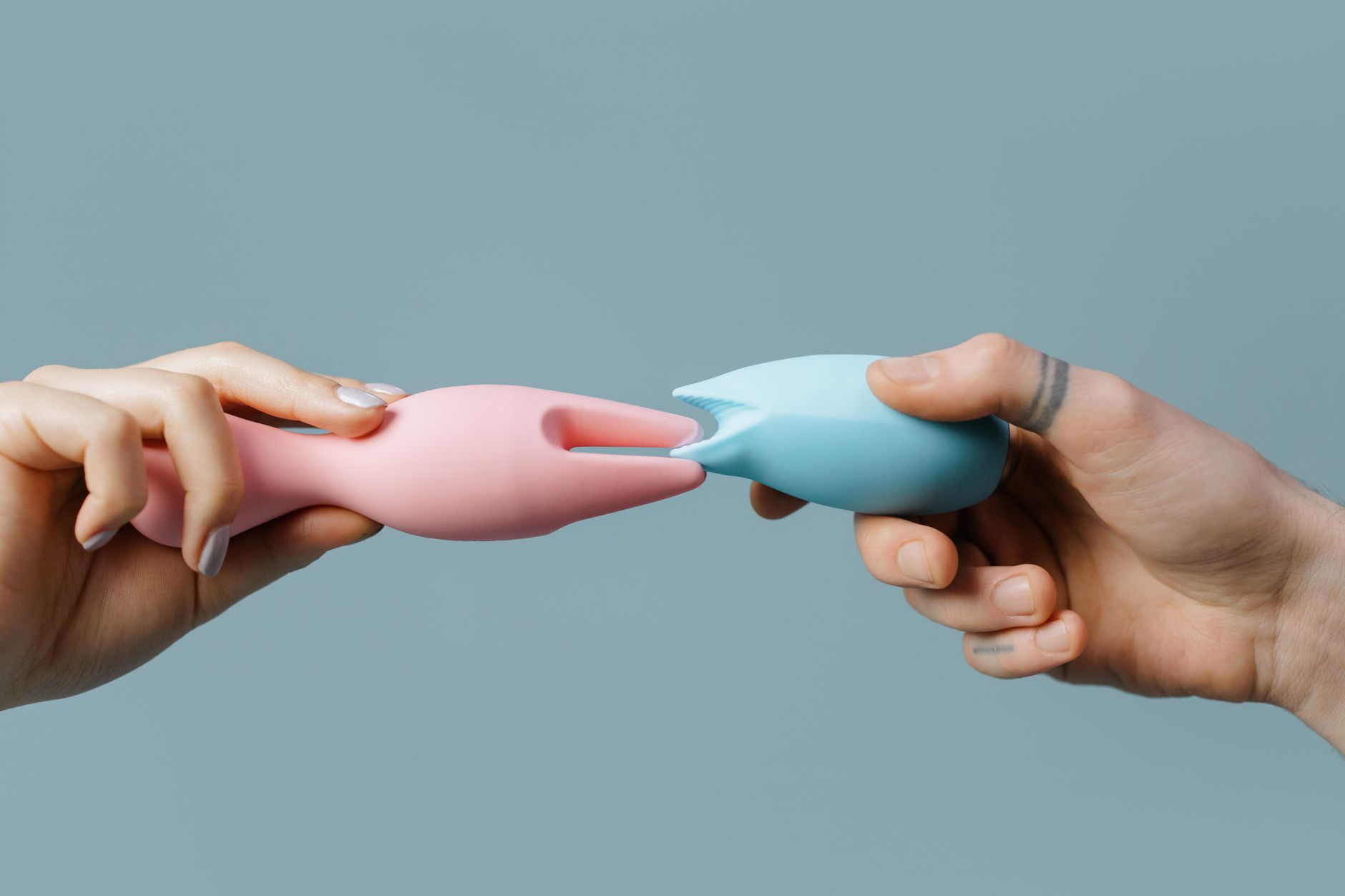
A good clitoral vibrator like the Lemon Vibrator gives you independent control. You're not dependent on your partner's pace anymore. You can use it during partnered sex at whatever rhythm and intensity your body actually needs.
This changes everything about the dynamic because now there's no rush. You're not performing against the clock. Your partner keeps moving at their pace. You're working with the vibrator at yours. Two separate rhythms happening simultaneously. Both people get what their body needs.
The psychological shift matters as much as the physical one. You're no longer waiting for your body to catch up. You're taking responsibility for your own pleasure. That's not selfish. That's exactly how good sex works.
Setting it up so it feels natural
The conversation first. Not during sex. Before. "Sometimes my body needs different stimulation to finish. I want to use a vibrator during sex sometimes. Would that work for you?" Most partners are relieved. They're often worried they're not doing enough anyway.
Position matters. If you're on top or in a position where you have space between your bodies, a vibrator integrates seamlessly. You hold it. You control the pressure. It's in your hands, literally.
If you're in a position where space is tight, a smaller vibrator works better. Something compact that doesn't get in the way. The Lemon Vibrator is specifically designed for this because of its shape. It reaches your clitoris without friction against your partner's body.
Start the vibrator before penetration begins. Get yourself aroused and closer to the edge. Then your partner enters. You're already partway there. The vibrator keeps working. Your partner doesn't need to guess anymore. You're managing your own timeline.
The rhythm that actually works
Don't match your partner's pace. That defeats the entire point. Use the vibrator at whatever frequency your body responds to. This might be faster than your partner's rhythm. It might be different in pressure (lighter, more sustained). It might be circular instead of in and out.
Your clitoris isn't shaped the same as your vagina. It doesn't need the same motion. A vibrator gives you what you actually need, separate from what penetration provides.
Many people find that once they stop fighting their body's timeline, orgasm comes faster, not slower. The pressure drops away. Sensation becomes the focus. That's when everything shifts.
What to actually say if it feels awkward
Let's be honest: bringing a vibrator into partnered sex can feel vulnerable. Here's what I've seen work.
"I want to come during this. My body works better with vibration. This isn't about what you're doing. It's just how I'm wired." That's it. Frame it as biology, not criticism. Because that's what it is.
If your partner seems hesitant, ask what's underneath it. Often it's "Will I still be needed?" or "Does this mean I'm not enough?" Address that directly. "I want you inside me. I also need this to finish. Both things are true." That's the conversation that matters.
How to Use Lemon Vibrators During Sex With a Partner If You're Nervous covers the emotional side of this more deeply if you want to go deeper.
The pressure thing actually disappears
Here's what happens when you use a vibrator during partnered sex: the goal becomes shared pleasure instead of synchronized orgasm. You're not trying to time it the same anymore. You're both pursuing your own satisfaction with the same person.
Some people find they orgasm faster when they're not nervous. Some find it doesn't matter because the whole experience improves. You're present instead of performing. Your partner gets to focus on sensation instead of technique. Everyone wins.
The research on this is clear: people report higher satisfaction when they have agency over their own arousal. Surprise surprise. When you stop abandoning your own needs, sex gets better.
When timing still feels off
If you're using a clitoral vibrator and your partner finishes much faster than you can manage, it's okay to say "I'm not done yet." Then they wait, or they touch you in other ways, or you finish separately and reconnect. Sex doesn't have to end when one person orgasms.
Some couples use a vibrator as foreplay. Your partner uses it on you until you're close, then sex begins. Other couples use it during. Some use it after, separately. There's no right way. There's only what works for your bodies and your dynamic.
The lemon clitoral vibrators are designed for all of these because they're small, precise, and work at whatever rhythm you choose. They integrate into sex instead of interrupting it.
The difference between pressure and practice
Using a vibrator during partnered sex isn't a workaround for a broken system. It's how many people's bodies actually work best. You're not settling. You're being practical.
If you've spent years trying to orgasm on your partner's timeline, it might take a few sessions to actually relax into your own. Your body might need time to trust that you're not performing anymore. That's normal. You're unlearning performance anxiety. That takes more than one attempt.
Be patient with yourself. Keep the vibrator low-pressure (literally and figuratively) the first few times. Let your body adjust to having control again. Then increase intensity once you feel the shift.
FAQ
Should I warn my partner right before I use a vibrator or bring it up in advance?
Bring it up in advance. Not in the moment. Consent and comfort work better when there's no surprise. A conversation beforehand also gives your partner time to process, ask questions, and work through any hesitation privately instead of during sex.
What if my partner thinks using a vibrator means they're not satisfying me?
This is almost always about their insecurity, not about reality. Say it clearly: "Your body inside mine feels amazing. My clitoris also needs direct vibration to finish. Those are two separate things. I can want both." Most partners soften once they realize this isn't a referendum on their performance.
Can I use a vibrator with any type of sex or only certain positions?
Depending on the position, yes. Positions where you have space between your bodies work best (you on top, side-by-side, partner behind you). Positions that require full body contact are trickier, but a small vibrator can still work. Experiment and see what feels natural.
How loud is a typical clitoral vibrator during partnered sex?
Quite quiet, especially if you're already making other sounds. The Lemon Vibrator is designed to be discreet. If noise matters to you (housemates, kids down the hall), the lower vibration settings are quieter than the highest ones.
Does using a vibrator during sex mean I'll need it every time?
No. Some people use a vibrator most times. Some use it occasionally. Some switch between partnered sex alone and partnered sex with a vibrator. Your body isn't dependent on it. You're just giving yourself options. Use it when your body needs it. Skip it when you don't.
What if I take longer than expected even with a vibrator?
Then you take longer. That's fine. The whole point of using a vibrator is removing the rush. If you still need more time, take it. If your partner is uncomfortable waiting, that's a different conversation that has nothing to do with vibrators and everything to do with how they handle patience and pleasure.
The actual shift
I've worked with hundreds of couples on this exact issue. The ones who solve it aren't the ones with better bodies or higher libidos. They're the ones who decided that synchronized pleasure was less important than both people actually finishing satisfied.
Your timeline is valid. Your body isn't broken. The rhythm mismatch is just information that says you need a different tool. Use it. The sex gets better for everyone once you do.